
Professor Michel Danino (often spelled or pronounced in variations like “Denino” in some discussions) is a fascinating figure: a French-born scholar who crossed continents at a young age to immerse himself in India’s ancient civilization, eventually becoming one of its most dedicated chroniclers and educators.
Imagine a young man in 1970s France, barely out of his teens. Michel, born in 1956 in the picturesque coastal town of Honfleur, had already spent years diving into higher scientific studies. But something deeper called him—perhaps the stories of yogis, the writings of Sri Aurobindo, or the timeless pull of Indian philosophy. At just 21, he made a bold decision.

“I can’t stay here chasing equations when something alive is waiting across the ocean,” he might have told a skeptical friend back then. “India isn’t just a place—it’s a living civilization that’s been whispering to me since I was fifteen.”
In 1977, he arrived in India and never really left. He became an Indian citizen, lived for a time in the experimental community of Auroville in Tamil Nadu, and later settled amid the misty Nilgiri Mountains for two decades, where the quiet hills gave him space to read, reflect, and write.
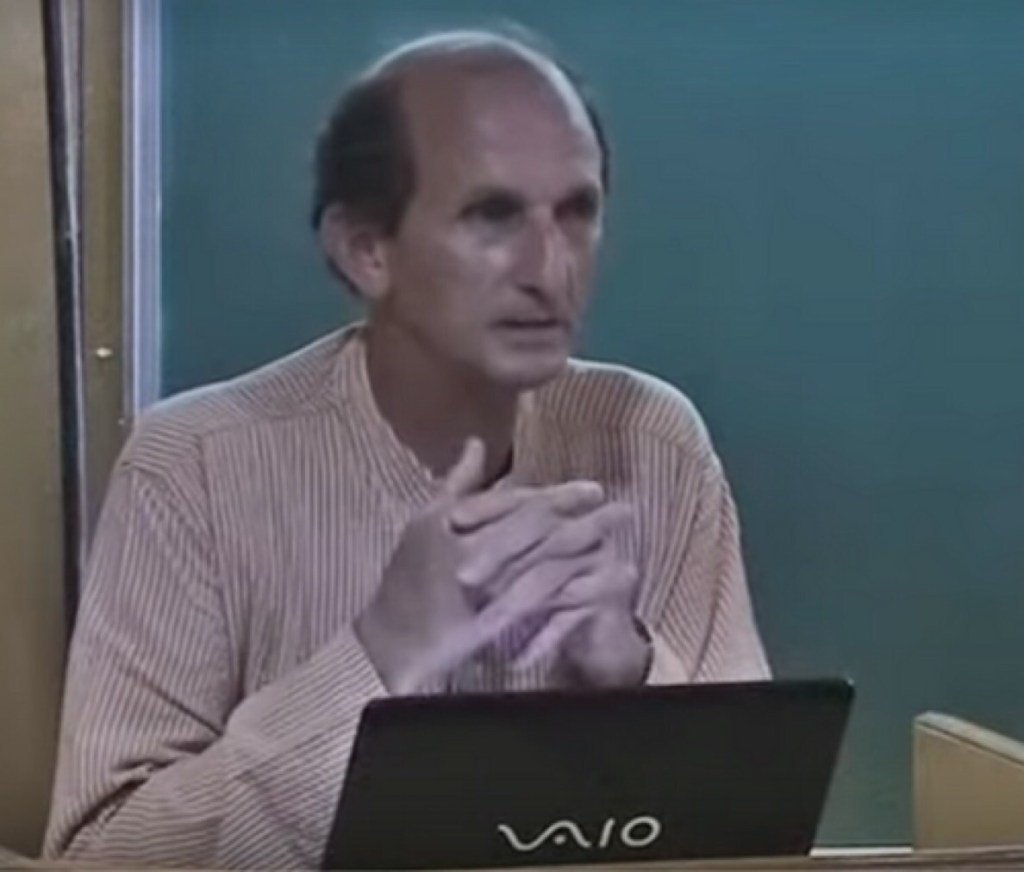
Over the years, Michel transformed his passion into scholarship. He authored influential books that blend archaeology, history, and cultural insight:
- The Lost River: On the Trail of the Sarasvati (2010) — a gripping multidisciplinary detective story tracing the ancient Vedic river that dried up, reshaping how we view the Harappan civilization.
- Indian Culture and India’s Future (2011) — reflections on what makes Indian civilization unique and how it can guide the modern world.
- He also edited Sri Aurobindo and India’s Rebirth (2018), bringing together the revolutionary thinker’s ideas on India’s spiritual destiny.
His work challenges outdated narratives with evidence-based clarity, often sparking lively debates. As a visiting professor at IIT Gandhinagar since 2011, he has taught courses on Indian civilization and knowledge systems, and helped build the Archaeological Sciences Centre. Students recall his lectures as eye-openers: “He doesn’t just teach facts,” one might say. “He makes you feel the riverbeds drying up 4,000 years ago, or the quiet genius of ancient Indian science.”
In 2017, the Government of India honored him with the Padma Shri for his contributions to education and culture. More recently, he chaired the NCERT’s social science curriculum committee, working to make school textbooks more honest and comprehensive—presenting history “without glorifying or sanitizing it,” as he has explained in interviews.
Picture him in a classroom or interview, leaning forward with quiet intensity:
“History isn’t about heroes and villains in black and white,” he might say. “It’s about understanding how societies rose, clashed, and evolved. If we hide the violence of any period—Mughal, colonial, or otherwise—we rob students of the truth they need to build a better future. India’s story is too rich, too layered, to be reduced to slogans.”
Professor Michel Danino’s The Lost River: On the Trail of the Sarasvati (published by Penguin India in 2010) stands as one of the most comprehensive and accessible works on this enigmatic river. Spanning about 360 pages, it’s not just an academic treatise—it’s a detective story that weaves ancient hymns, dusty British surveys, satellite photos, geological cores, and archaeological digs into a compelling narrative.
Picture Michel in his study in the Nilgiris or a quiet corner of IIT Gandhinagar, poring over maps late into the night:
“The Sarasvati isn’t a myth to be dismissed or a goddess to be romanticized alone,” he might explain in a measured tone during one of his lectures or interviews. “She’s a real river whose story unlocks so much about ancient India. The Rig Veda calls her ‘mighty and nourishing,’ flowing ‘from the mountain to the sea.’ Yet later texts show her vanishing into the desert. What happened?”
The book meticulously traces that transformation. Danino draws on multidisciplinary evidence:
- Literary clues — From the Rig Veda’s praise of Sarasvati as the “best of mothers, best of rivers” to the Mahabharata’s descriptions of pilgrimages along her drying course, where Balarama (Krishna’s brother) walks her banks and notes her disappearance at Vinashana (“the place of loss”).
- Geological and hydrological data — The river, largely identified with the modern Ghaggar-Hakra paleochannel in Rajasthan, Haryana, and Pakistan, once carried Himalayan waters (possibly fed by the Sutlej and Yamuna in earlier times). Tectonic shifts, earthquakes, and climate changes around 2200–1900 BCE caused major river captures: the Sutlej diverted westward to join the Indus, and the Yamuna eastward to the Ganga. The Sarasvati gradually shrank into a monsoon-fed seasonal stream before drying up almost completely.
- Satellite imagery and remote sensing — Studies from the 1980s onward (like those by ISRO scientists) revealed buried paleo-channels visible from space, wide riverbeds hidden under the Thar Desert sands, and ancient water still trapped underground (dated via isotopes).
- Archaeological footprint — The Indus Valley (or Harappan) civilization thrived from ~3300–1900 BCE, but while only about 100 sites hug the Indus, nearly 1,000 cluster along the Ghaggar-Hakra—suggesting it was the heartland. Major sites like Kalibangan, Banawali, and Rakhigarhi flourished here during the Mature Harappan phase. As the river weakened, cities were abandoned or shifted, contributing to the civilization’s decline (alongside broader aridification).
Danino addresses controversies head-on. He challenges the outdated “Aryan Invasion” model, noting the absence of sudden cultural breaks or invading artifacts. Instead, Vedic culture appears rooted in the region during the late Harappan period—no dramatic arrival needed. The book gently critiques colonial-era biases in historiography while praising early British surveyors who first “rediscovered” the river’s ghost traces in the 19th century.
Readers often describe the experience as eye-opening:
One reviewer might say, “Danino makes the dry beds come alive—you feel the river’s pulse fading, the people migrating, the hymns turning nostalgic.”
Another: “It’s like reading a scientific thriller: every chapter builds the case with maps, photos, and timelines.”
The book includes rich visuals—satellite images, site photos, detailed maps of river courses and Harappan settlements—that make abstract data vivid.
In essence, The Lost River argues that renaming the “Indus Civilization” to “Indus-Sarasvati Civilization” better reflects reality. The Sarasvati wasn’t peripheral; she was central to one of the world’s earliest urban societies, whose technologies, urban planning, and cultural seeds fed into later Indian traditions.
Michel has said in talks (like his presentations on Sarasvati archaeology):
“Understanding this river helps us see continuity rather than rupture in India’s ancient past. It’s not about proving superiority—it’s about recovering a lost chapter of human achievement.”
If you’re drawn to how science, scripture, and fieldwork converge to rewrite history, this book remains essential reading—clear, evidence-driven, and deeply humanizing of a civilization often reduced to ruins.
Michel Danino remains a lifelong student of India—humble, rigorous, and unafraid of controversy in the pursuit of truth. From a young Frenchman captivated by distant ideas to a Padma Shri awardee shaping how millions of Indian students understand their heritage, his journey reminds us that sometimes the deepest belonging comes not from where you’re born, but where your mind and heart choose to root themselves.
The Supreme Court’s recent judgment directing the dissociation of Professor Michel Danino and his colleagues from all publicly funded educational roles is nothing short of a draconian overreach, a blatant assault on academic freedom, and a chilling attempt to sanitise the narrative of institutional flaws in India. As a Padma Shri awardee and a scholar who has dedicated his life to illuminating India’s ancient civilisation, Danino has been unfairly vilified for daring to include a factual discussion on judicial corruption in a Class 8 NCERT textbook. This ruling not only undermines the principles of transparency and education but also exposes the judiciary’s hypersensitivity to scrutiny, even as real corruption festers within its ranks. Let us dissect this travesty with the data it demands.
First, consider Michel Danino’s impeccable credentials. Born in France in 1956, he relocated to India in 1977, becoming an Indian citizen and immersing himself in the study of its heritage. He has authored seminal works such as The Lost River: On the Trail of the Sarasvati (2010), which marshalled archaeological, hydrological, and satellite data to revive the Vedic Sarasvati River’s historical significance, challenging colonial-era myths. Danino debunked the outdated Aryan Invasion Theory through rigorous evidence from sites like Dholavira and Lothal, demonstrating the continuity of the Indus Valley Civilisation with Vedic culture. As a guest professor at IIT Gandhinagar, he helped establish its Archaeological Sciences Centre, and in 2017, he was honoured with the Padma Shri for contributions to literature and education. He convened the International Forum for India’s Heritage, boasting over 160 eminent members, and has published in journals like Man and Environment and Puratattva. To brand such a scholar as lacking “reasonable knowledge” or deliberately misrepresenting facts is an insult to intellectual integrity.
Now, turn to the offending chapter in the NCERT Class 8 Social Science textbook, titled “The Role of the Judiciary in Our Society.” Far from being a sensationalist rant, it factually addressed systemic challenges, including “corruption at various levels” that delays justice. It highlighted the staggering backlog: approximately 81,000 pending cases in the Supreme Court, 6.24 million in High Courts, and 47 million in district and subordinate courts. The text linked these to structural issues like judge shortages, complex procedures, and weak infrastructure, echoing the maxim “justice delayed is justice denied.” It noted that judges are bound by a code of conduct, yet corruption persists, impacting access to justice, especially for the economically disadvantaged. This is not “misrepresentation”—it is essential civic education for young minds to understand institutional realities and push for reforms.
The irony is palpable when juxtaposed against the data on actual judicial corruption in India. Between 2016 and 2025, over 8,600 complaints were filed against sitting judges, peaking at 1,170 in 2024. Transparency International’s 2013 Global Corruption Barometer found that 45% of Indian households viewed the judiciary as corrupt, with an average corruption score of 3.3 out of 5. A 2026 India Today survey revealed that 85% of Indians perceive the judiciary as deeply or somewhat corrupt, with only 8% believing it is corruption-free. In 2013, 36% of citizens reported paying bribes to the judiciary, with 59% to lawyers, 5% to judges, and 30% to court officials for favourable outcomes. As of 2024, over 50 million cases remain pending, exacerbating vulnerabilities where litigants resort to bribes to expedite proceedings. Chief Justice B.R. Gavai himself acknowledged in 2025 that instances of corruption erode public confidence, citing cases like the Allahabad High Court’s Justice Yashwant Varma, embroiled in a cash scandal. From 2017 to 2021, 1,631 complaints on judicial misconduct were forwarded via the Centralised Public Grievance Redress system. These figures, drawn from official and international sources, affirm that the chapter’s content was grounded in reality, not malice.
This ruling reeks of institutional insecurity. By blacklisting Danino and his associates—Suparna Diwakar and Alok Prasanna Kumar—from any publicly funded work, the Court has effectively censored discourse on its own failings. It mocks the separation of powers, positioning the judiciary as untouchable while it lectures on accountability. Where was this zeal when former Law Minister Shanti Bhushan alleged that eight of sixteen former Chief Justices were corrupt? Or when the Press Information Bureau reported recurring complaints about judicial integrity? The Court’s order to rework the chapter only with “domain experts”, including a former judge, smacks of self-preservation, not pedagogy.
Education should foster critical thinking, not shield power from critique. By punishing scholars like Danino, who has enriched India’s historical narrative, the judiciary risks alienating the very citizens it serves. This is not justice; it is judicial authoritarianism. We must demand a reversal, for the sake of our democracy and our children’s right to truth. #StandWithDanino #JudicialOverreach #AcademicFreedom


 deemagclinic
 deemag and chest clinic