
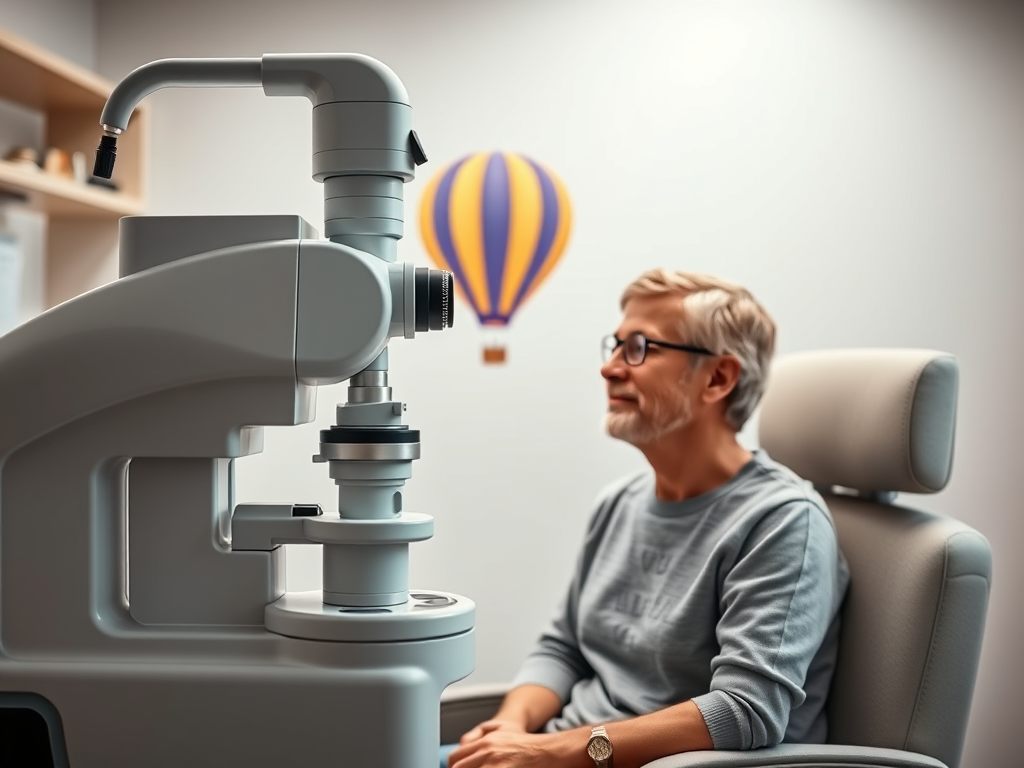
A Japanese Autorefractometer is being used at our clinic routinely.
An autorefractometer is a device used by eye care professionals to measure a patient’s refractive error, which determines the prescription needed for glasses or contact lenses. It’s a quick, non-invasive test that provides an objective estimate of how well your eyes focus light. Here’s what a patient can expect during the procedure:
What to Expect During an Autorefractometer Test
- Preparation:
- You’ll be asked to sit in front of the autorefractometer, which looks like a machine with a chin rest and a viewing window.
- The technician or optometrist may explain the process briefly and ask you to remove glasses or contact lenses, if applicable.
- You’ll place your chin on the rest and forehead against a band to keep your head steady.
- During the Test:
- You’ll look into the machine at a target, often a picture (like a hot air balloon or a house) that may appear blurry at first and then come into focus.
- The machine automatically measures how light changes as it enters your eyes, calculating your refractive error (e.g., nearsightedness, farsightedness, or astigmatism).
- You may be asked to blink or stare at the target without moving your eyes.
- The process is painless and typically takes less than a minute per eye.
- The machine may make soft clicking or whirring sounds as it adjusts lenses internally.
- Sensations:
- You might notice brief flashes of light or slight changes in focus as the machine takes measurements.
- There’s no discomfort, though staring at the target for a few seconds might feel mildly tiring.
- After the Test:
- The autorefractometer provides a printout or digital results, which the eye care professional uses as a starting point for your prescription.
- These results are not the final prescription; they’re often refined through a subjective refraction test (e.g., “Which is better, lens 1 or lens 2?”) to ensure accuracy.
- Your eye care provider will discuss the results and next steps, such as whether you need glasses, contact lenses, or further testing.
Key Points for Patients
- Purpose: The test helps detect refractive errors like myopia (nearsightedness), hyperopia (farsightedness), astigmatism, or presbyopia (age-related difficulty focusing up close).
- Accuracy: While highly accurate, the autorefractometer’s results are a starting point and may be fine-tuned by the optometrist.
- No Risks: The test is safe, non-invasive, and doesn’t involve eye drops or contact with the eye.
- Time: The procedure is quick, usually lasting 1–2 minutes.
- Comfort: It’s comfortable, though some patients may feel slight eye strain from focusing on the target.
Tips for a Smooth Experience
- Try to relax and follow the technician’s instructions to look at the target.
- Blink normally to avoid dry eyes during the test.
- If you’re nervous, let the staff know—they can explain the process to ease your concerns.
- If you wear contact lenses, you may be asked to remove them beforehand, so bring a case and solution.
Who Might Need This Test?
- People getting a routine eye exam.
- Those experiencing blurry vision, difficulty reading, or headaches.
- Patients updating their glasses or contact lens prescription.
- Children or adults being screened for vision problems.

If you have specific concerns (e.g., a medical condition affecting your eyes or anxiety about the test), inform your eye care provider beforehand. They can adjust the process or provide additional guidance.
Would you like me to search for more details or clarify anything specific about the autorefractometer experience?


 deemagclinic
 deemag and chest clinic