
Those were tumultuous times. Nehru had decided on the partition of India. India was about to endure a bloody partition. The situation in India was precarious as many Muslims were moving from India to Pakistan and Hindus were moving the other way, creating turmoil, accompanied by a lot of looting and bloodshed. Many of them did reach their destination. Some died while trying. Most lost all their fixed assets like land and gold. Some of the fortunate ones were able to bring some cash from their ancestral place and resettle in another distant place, after buying a house or so after enduring all the hardships. Doctor Harbans Lal was a famous homeopath doctor of Lahore. During those unruly days of the partition of India, he and his wife decided to move to India and ultimately settled in the sleepy small hill town under the foothills of the Himalayas, known as Dehradun. Doctor Harbans Lal’s ability to do so speaks volumes about his decision-making and enduring capabilities. He was able to purchase a beautiful house at Curzon Road, Dehradun from a Muslim family who were desperate to leave for Pakistan.
A reasonably tall fair Punjabi Hindu-Chopra Doctor, always dressed in impeccable whites, he stood at five feet eight inches tall, with sharp aquiline features and dyed jet black hairs of head combed back with a clean shaven face. His wife though less in height was equally impressive in appearance always dressed in impeccable saree. Both spoke Hindi with a Punjabi accent and were affable and mixing and were soon popular in Dehradun.
Doctor Harbans Lal also bought a nice shop in the Moti-Bazar area, the hub of commercial activity in Doon which served as his clinic, and a green old model fiat the doors of which opened from front and had now out dated feature like an illuminated rod like turn indicator which erected itself at right angle from the side pillar of the car on pressing a switch on the driving wheel console while turning to side. Those were early days for motor cars and few people had it. No body bothered about blinking indicators even when they were thrust out of the side of car from the left or the right. To indicate the he is turning the car, the driver had to stick out his hand from out of the window and point in the direction he will be turning or circling. No body found it inconvenient as the cars then were not air conditioned and at most of the times, the window panes of the car was down than wounded up. This green Fiat car was chauffeured by an kind soft spoken old bespectacled bald man who spoke little. The car took him to and from from his clinic at Moti Bazar to his home at Curzon Road twice a day as he used to practice in morning and evening shift with a lunch siesta in between.
His House at Curzon Road was a large mansion with a central main house, an outhouse, all painted white, with a silver tin roof, a majestic porch for his green Fiat car, a pillared verandah with hanging orchids and adorned with shining white chip marble floor in front of the house with and a surrounding Garden and a large number of fruit-bearing trees, mostly litchi and mangoes, and ornate flower beds. The flower beds were so meticulously maintained and had rows and rows of multicoloured Dahlias and other flowers.
His clinic at Moti Bazar was a large shop with a prominent display board on which was written Doctor Harbans Lal, painted green in white letters, with many rooms or compartments in a straight line, the first was the waiting room with no chairs where his patients congregated, a small portion of which was converted into a dispensary with shelves having lots of shining labeled bottles with pills and a large tapped jar containing colorless liquid which was my favorite. In line in the second compartment of his clinic was the main store cum dispensary with further rows of shelves on all the walls with bigger labeled shining bottles containing more and more round sweat pills. We never ventured in and perhaps there was a third compartment as well.
Doctor Harbans Lal always was seen standing and walking to and fro inside his clinic from his waiting room where he conversed with his patients to his side dispensary and sometimes into his store to pick and choose the medicines to be dispensed. There was no chair in the room either for him or his patients. He was always busy and took little or no money from his patients. At least I never saw him demanding money. He was always giving in the form of either Medicine on all days to his patients or eatables in the form of buns, which he picked from a large stack kept inside to beggars who congregated in sizable numbers in front of his clinic every Tuesday.
Dr. Harbans Lal was a compassionate and dedicated medical practitioner in Dehradun, known for his blend of professional skill and deep humanity. A respected doctor who ran his clinic and perhaps a small shopfront setup in the city, he balanced treating patients with acts of quiet kindness that endeared him to the local community.
Every Tuesday, without fail, he would set aside time to distribute fresh buns to the beggars and the needy who gathered in front of his shop. In an era when hygiene concerns were paramount—especially as he continued seeing patients throughout the day—he devised a simple yet ingenious way to maintain cleanliness and avoid any contamination of the food. He used a long stick with a sturdy pin fixed at the end. He’d carefully spear a bun onto the pin, hold it out toward the waiting person, and let them pull it off themselves.
One regular beggar might approach hesitantly, hands outstretched. Dr. Lal, with a warm smile and steady hand, would extend the stick and say in his reassuring Punjabi tone,
“Koi gal hi nahi hai katai bhi. Don’t worry.”
(Translation: “There’s no issue at all, not even a scratch. Don’t worry.”)
The words became his signature phrase—calming not just the beggars receiving the buns, but also anxious patients in his clinic who worried about their ailments. He’d repeat it gently while examining someone, easing their fears with the same steady confidence he showed in every act of service.
This weekly ritual wasn’t grand charity; it was personal, consistent, and thoughtful—reflecting a man who lived his compassion daily. Dr. Harbans Lal wasn’t just a doctor healing bodies; he was a neighbor feeding souls, one bun and one reassuring word at a time. His life in Dehradun reminds us that true kindness often comes wrapped in the simplest gestures, delivered with a quiet “Don’t worry.”
He also used to dispense in mornings from his residence also and we could see a number of cars of patients in waiting in his driveway. He even made house calls also but you had to pick him up and drop him at his residence in your car. He even once attended my grand mother though flushed with fever and never lost his cool.
We were his family friends as well as his patients, all our family was at times lining up for small ailments at his dispensary. So we went there took medicines and left. The bill was given after lots of persuasion from my uncle at a yearly interval and did not amount to much. I also went there several times and after complaining of stomach aches was treated to the treat of fuzzy drink which the doctor prepared after mixing water with the clear liquid in the jar, and by magic it was fizzing and almost immediately gave me relief from stomach cramps. Those were the days of unfiltered water and lots of stomach ailments and we even had a goddess of stomach ailments cum pox in Matawala bagh, who warranted an annual pilgrimage, with lots of food and fritters.
Doctor Harbans Lal was adept at reassuring his patients and patients with all ailments, small or large, flocked to his clinic for a remedy. Apart from the fuzzy liquid and the pills, he used to dispense his medicine which comprised of sweat white powder enveloped in a white paper carefully folded and locked in a way so that none of the contents would spill. We just had to unfold the paper pour the contents in our mouth straight and swallow it if no water was available. Or you could take it with water, three times a day. For a week or so. And there you were, fit and fine. His pet phrase to the patient was, – ‘Koi Gal hi nahi hai Katai bhi’, meaning that there was nothing to worry about, and he was repeating this phrase to his patients, morning, day, and night, as he dispensed, till they got well. I think modern doctors would do well to remember this phrase rather than urge the patients for more and more tests and increase their discomfort, though the truth is that consumer courts had spoilt it all.
Doctor Harbans Lal was known as Doctor Sahib and as was customary, his wife was known as ‘doctorni sahib’, though she was not a doctor. He had four offspring, Shashi, Vijay, Rajesh, and Prem. Vijay went on to become a famous pathologist after his professional education at Amritsar Medical College. Rajesh was a versatile sitar player and translated the epic Mahabharata into the Sanskrit version apart from assisting Vijay in his pathology laboratory. Shashi was an educationist with a stint at Welham School, a premier boarding school in Dehradun. Prem went on to become a helicopter pilot after his stint at the Indian Military Academy.
In 1971 war broke out between India and Pakistan. Lieutenant Prem fresh out of the academy was deployed, perhaps to the front lines. During those dark days and blackout nights, we once went to Doctor HarbansLal’s, clinic for some ailment. One of us casually inquired Doctor Sahib about the well-being of his son Prem who was in the Indian Air Force. The battle was in full force at that time. A tear welled in his eyes and rolled down. That was the only time I saw him getting emotive.
Doctor Harbans Lal had a large house with lots of trees and lots of garden waste. They used the garden in innovative ways. One was to have a large incinerator in which they burned all the garden waste and leaves and used the fire to heat the water tanks. Second was the making of litchi into a preserve and juice which they used to consume for long after the litchi season was over.
My grandmother was a patient of Doctor Sahib and to oblige him used to visit his house frequently with lots of snacks which she supervised cooking herself, snacks included lots of khastas swalis pickles, and mango chutneys. I was young then and used to carry my tricycle and ride the paving inside their house and had a jolly time.
Doctor Harbans Lal died of myocardial infarction many years back. I remember taking care of him in the ICU of Doon Hospital. What I distinctly remember was that he was so light when I picked him up from his ICU bed. I was the intern then. Those days there were no good nursing homes in Dehradun. Catheterization labs came much later. His wife later on died due to pneumonia.
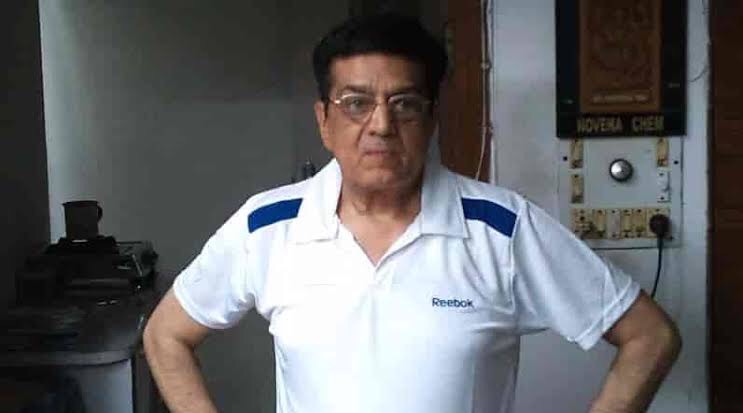
Doctor Vijay, son of Dr Harbans Lal, later known as Doctor VP Chopra born on 13 Th of February, became a pathologist and started his practice as his residence. He also joined Doctor Peshin Nursing Home and used to visit there in the afternoons on his Java motorcycle and bypassed our house. Those were the days of loud motorbikes and what a racket he raised as he drove along. He still has his Java motorcycle at his house, carefully tucked in. He married a doctor from Agra, an Obstetrician, and we attended his wedding at Hotel Rajput in New Delhi. I was overwhelmed by attending the event at a star hotel for the first time. The breakfast was at the posh restaurant of the hotel and the spread was mostly European. There was a table with lots of baked buns and since bus were my favourite at school I stood on the counter for a long enough time for the waiter to pile up my plate with couple of buns. Unfortunately, it was hard bun and perhaps a delicacy for European tastes but it was too hard for me to bite and all those buns were wasted. Another incident that I remember was that our family went off to see Red Fort from the hotel and got late in returning resulting in embarrassing delay to the departure of the whole barat to Dehradun. While on our way back we were all treated to lots of sweats. A notable incident occurred when Shashi ji was giving sweats to the Panditjee who was accompanying us, from a sweat box, he spread his hands as to take the whole box. Shashi Ji pointed out that pundit ji was to pick and choose one piece of sweat only and not the whole box. Many co-passengers were amused. Here pundit jee was not at fault as Brahmins depends on alms are not allowed to demand or pick and choose his choicest item. The yajman has to give alms and Brahmin pundit has to receive. So it is a different sort of relationship than amongst equals. The nuances are interesting. Dr Vijay has two offsprings from that marriage who lives in Delhi.
Those were the early days of medical care in Dehradun. My grandma needed a urine culture. Even Dr Chopra’s pathology clinic did not have it. The only place you could get it done was at a military hospital, Dehradun. Imagine that. Hospital care, MRI CT Scan, or ultrasound came much later.
Later Doctor VP Chopra was kind enough to grace my ‘deemag’ clinic as the chief guest and inaugurated it in 1989. Lately, Doctor VP Chopra was presented with a lifetime achievement award by the Indian Medical Association, Dehradun branch. He enjoys his evening tonic and is frequently seen at the doon club and IMA gatherings.
Prem married his class fellow from Saint Thomas school, Pramila, and is living in separate house just next to Doctor Chopra’s house.
Shashi and Rajesh did not marry. Rajesh passed away from a stomach ailment a few years back. Shashi is living with Doctor Chopra his brother, in the same grand old house in a style reminiscent of the old doon way of life.


 deemagclinic
