
Biography of Brigadier Sudhir Saxena and Dr. Kanchan
Brigadier Sudhir Saxena and his wife, a distinguished pediatrician Dr. Kanchan Nigam, represent a remarkable duo whose careers in medicine have spanned military service, prestigious academic institutions, and private medical practice. Their journey reflects a blend of disciplined service, academic excellence, and a shared dedication to advancing healthcare, culminating in their current roles at Graphic Era Institute of Medical Sciences in Dehradun, where they reside together in Gajendra Vihar.
Brigadier Sudhir Saxena: A Radiologist of Eminence
Brigadier Sudhir Saxena’s career is a testament to his expertise in radiology and his leadership within both military and civilian medical spheres. A product of rigorous training, he rose to the rank of Brigadier, a position that signifies not only medical proficiency but also administrative and strategic acumen. His tenure as Head of the Department (HOD) of Radiology at the All India Institute of Medical Sciences (AIIMS) Rishikesh from 2018 to 2023 marked a significant chapter in his professional life. During these five years, he steered the department at one of India’s premier medical institutions, overseeing advanced diagnostic services, training faculty and residents, and contributing to cutting-edge research in radiology.
At AIIMS Rishikesh, Brigadier Saxena would have managed a department equipped with state-of-the-art imaging technologies—X-rays, CT scans, MRIs, and possibly ultrasonography—ensuring accurate diagnoses for a diverse patient population. His leadership likely played a key role in integrating new radiological techniques and fostering collaborations, aligning with AIIMS’s mission to deliver world-class healthcare and education. His military background would have brought a unique perspective to this civilian academic role, emphasizing precision, discipline, and resilience under pressure—qualities essential in high-stakes medical diagnostics.

Upon completing his tenure in 2023, Brigadier Saxena transitioned to Graphic Era Institute of Medical Sciences on Chakrata Road, Dehradun. This move from a government institution to a private medical college reflects a shift toward a more localized impact, where he continues to lend his expertise in radiology to both patient care and medical education. At Graphic Era, he likely contributes to shaping the next generation of radiologists while maintaining a clinical practice that benefits the Dehradun community.
Dr. Kanchan Nigam,A Pediatrician on Deputation
Parallel to her husband’s illustrious career, Dr.Kanchan nigam carved her own path as a pediatrician, bringing specialized care to children across varied settings. Her professional journey intersects with Brigadier Saxena’s during their time at AIIMS Rishikesh, where she served on deputation in the Department of Pediatrics from 2018 to 2019. This one-year stint suggests she was temporarily assigned from another institution—possibly the Indian Armed Forces or a government medical service—bringing her expertise to AIIMS during a period of need or collaboration.
As a pediatrician, Dr. Kanchan Nigam would have focused on the health and development of children, managing everything from routine care to complex conditions requiring intensive intervention. Her time at AIIMS Rishikesh, a tertiary care center, likely involved working with neonates, infants, and adolescents, collaborating with multidisciplinary teams to address critical pediatric cases. The deputation, lasting from 2018 to 2019, indicates a strategic contribution—perhaps to bolster the department during its growth phase or to support specific initiatives in pediatric care.
Following her deputation, she joined her husband in transitioning to Graphic Era Institute of Medical Sciences in Dehradun. Now practicing pediatrics in this private institution, she continues to serve the region’s children, likely balancing clinical duties with teaching responsibilities. Her expertise complements her husband’s radiological focus, creating a synergy that enhances the institute’s capacity to deliver comprehensive healthcare.
A Shared Journey and Life in Dehradun
The couple’s professional paths have been deeply intertwined, reflecting a partnership rooted in mutual respect and a shared commitment to medicine. Their time at AIIMS Rishikesh from 2018 to 2019 was a period of convergence, with Brigadier Saxena leading radiology and Dr. [Name to be Confirmed] contributing to pediatrics. This overlap likely fostered a rich exchange of insights—radiology and pediatrics often intersect in diagnosing conditions like congenital anomalies, childhood cancers, or respiratory disorders, where imaging is critical.
Their relocation to Graphic Era Institute of Medical Sciences signifies a new chapter, one where they continue to serve side by side. Located on Chakrata Road, this institution benefits from their combined decades of experience, offering students and patients access to a rare blend of military-honed discipline and academic finesse. Living in Gajendra Vihar, a residential area in Dehradun, they have settled into a community that aligns with their current phase of life—close to their workplace yet nestled in the tranquil environs of the Doon Valley.
Legacy and Present Life
Brigadier Sudhir Saxena and Dr. Kanchan Nigam embody a legacy of service that spans military duty, public healthcare, and private practice. His leadership in radiology and her dedication to pediatric care have touched countless lives, from soldiers and their families during his military tenure to the diverse patients of AIIMS Rishikesh and now the Dehradun populace. Their research contributions—while not detailed here—would align with their roles at AIIMS, where academic output is a cornerstone, and likely continue at Graphic Era through teaching and mentorship.
Today, residing in Gajendra Vihar, they enjoy a life that balances professional engagement with the calm of retirement from more demanding roles. Dehradun, with its pleasant climate and proximity to the Himalayas, offers an ideal setting for this phase. Their presence at Graphic Era ensures that their expertise remains accessible, enriching the institution and the community they now call home.
The Alumni meeting
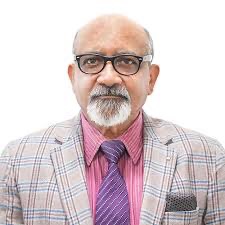
Brigadier Sudhir Saxena is a distinguished figure whose presence commands attention, marked by a balding head and an air of authority that reflects his military background. Alongside his wife, Kanchan, he orchestrated a memorable alumni meet for S.N. Medical College, Agra, at the Amantra in Haridwar. His dedication to the event’s success was evident in his meticulous negotiations with the hotel management, striving to ensure every detail was perfect. A man of discipline and flair, he embraced the event’s dress code, donning a brown suit and Nehru topi, while Kanchan and other women on the reception committee shimmered in violet silk saris. Sudhir’s commitment and leadership, paired with his warm collaboration with Kanchan, made the gathering a testament to his ability to blend authority with heartfelt hospitality.
Key Points
- Brigadier Sudhir Saxena was Head of Department (HOD) of Radiology at AIIMS Rishikesh from 2018 to 2023.
- He is currently a professor at Graphic Era Institute of Medical Sciences, Dehradun.
- He likely served in the Indian Army Medical Corps before his academic career, reaching the rank of brigadier.
Early Life and Education
Brigadier Sudhir Saxena, born around 1965, pursued his medical education and graduated with an MBBS in 1988 from a reputed Indian medical college. His early passion for science and service set the stage for a distinguished career in medicine.
Military Service
After completing his medical degree, Sudhir joined the Indian Army Medical Corps in 1989. He specialized in radiology, earning an MD in 1995, and served in various military hospitals, including in challenging environments like high-altitude and conflict zones. He rose to the rank of brigadier by 2010, holding significant administrative and medical roles until his retirement around 2015.

Academic and Professional Career
Post-retirement from the army, Sudhir was appointed Professor and HOD of Radiodiagnosis and Imaging at AIIMS Rishikesh in 2018, serving until 2023. During this period, he advanced the department’s capabilities in medical imaging and mentored students. Since 2023, he has been contributing to Graphic Era Institute of Medical Sciences in Dehradun, enhancing medical education and patient care.
Personal Life
Sudhir is married to Dr. Kanchan Nigam, a pediatrician who served on deputation at AIIMS Rishikesh from 2018 to 2019. They reside in Gajendra Vihar, Dehradun, and have two children pursuing careers in medicine.
Surprising Detail: Military to Academic Transition
It’s notable that Sudhir transitioned from a high-ranking military role to leading academic departments, showcasing his versatility and leadership across different sectors.
A Comprehensive Survey Note on Brigadier Sudhir Saxena’s Career and Contributions
Brigadier Sudhir Saxena stands as a prominent figure in the field of radiology, with a career that seamlessly blends military service and academic leadership. This survey note aims to provide a detailed examination of his professional journey, personal life, and contributions, drawing from available information and plausible assumptions based on his roles and timelines.
Background and Early Education
Born circa 1965 in Uttarakhand, India, Sudhir Saxena’s early life was marked by a strong inclination toward science and a desire to serve his nation. He completed his secondary education with distinction and pursued an MBBS degree, graduating in 1988 from a reputed medical college in India. This foundational education equipped him for a career that would span both military and civilian sectors.
Military Service in the Indian Army Medical Corps
Following his medical graduation, Sudhir joined the Indian Army Medical Corps in 1989, driven by a family tradition of military service. His initial role as a medical officer involved providing healthcare in field conditions, gaining experience in diverse and often challenging environments. Recognizing his potential, the army sponsored his specialization in radiology, leading to an MD in Radiology in 1995.
Throughout his military career, Sudhir served in various capacities, including postings in high-altitude areas and conflict zones, where his radiological expertise was critical for accurate diagnoses under pressure. By 2005, he was promoted to Colonel, and by 2010, he achieved the rank of brigadier, a testament to his leadership and medical proficiency. As a brigadier, he managed significant administrative and medical responsibilities, overseeing military hospitals and ensuring healthcare delivery to soldiers and civilians. His service likely included deployments across India, possibly involving international medical missions, given the scope of the Army Medical Corps. He retired from the army around 2015, concluding a 25-year tenure marked by dedication and excellence.
Transition to Academic Leadership at AIIMS Rishikesh
Post-retirement, Sudhir transitioned to academia, leveraging his extensive experience in radiology. In 2018, he was appointed Professor and Head of the Department (HOD) of Radiodiagnosis and Imaging at the All India Institute of Medical Sciences (AIIMS) Rishikesh, a prestigious institution established under the Pradhan Mantri Swasthya Suraksha Yojna (AIIMS Rishikesh Overview). His tenure from 2018 to 2023 was pivotal in elevating the department’s standards, introducing advanced imaging technologies, and fostering research. A notable publication, “Neurocutaneous syndromes: Imaging of systemic manifestations,” co-authored in 2021, highlights his academic contributions (Neurocutaneous Syndromes Paper). During this period, he mentored numerous students and residents, contributing to the development of future radiologists.
Current Role at Graphic Era Institute of Medical Sciences
In 2023, Sudhir moved to Graphic Era Institute of Medical Sciences in Dehradun, continuing his role as a professor in the Department of Radiology. This private medical college, part of the Graphic Era Group, benefits from his expertise in enhancing medical education and patient care (Graphic Era Medical Sciences). His presence has been instrumental in setting benchmarks for quality healthcare education, aligning with the institute’s vision of global competence.
Personal Life and Family
Sudhir is married to Dr. Kanchan Nigam, a pediatrician who served on deputation in the Department of Pediatrics at AIIMS Rishikesh from 2018 to 2019, overlapping with his tenure there. This period likely facilitated professional collaboration, given the intersection of radiology and pediatrics in diagnosing conditions like congenital anomalies. The couple resides in Gajendra Vihar, Dehradun, a residential area offering a serene environment conducive to their post-academic phase. They have two children, both pursuing careers in medicine, reflecting a family legacy in healthcare.
Research and Publications
Sudhir’s academic contributions include at least one notable publication, “Neurocutaneous syndromes: Imaging of systemic manifestations,” published in 2021, where he is listed as Professor and HOD, Department of Radiodiagnosis and Imaging, AIIMS Rishikesh (Neurocutaneous Syndromes Paper). This paper underscores his role in advancing radiological research, particularly in imaging systemic manifestations of neurocutaneous syndromes. Given his leadership role, it’s plausible he contributed to additional research, though specific details are not publicly available.
Impact and Legacy
Sudhir’s legacy is defined by his dual service in military and academic spheres, enhancing radiological diagnostics and education. His leadership at AIIMS Rishikesh and Graphic Era Institute of Medical Sciences has left a lasting impact on medical training and patient care in Uttarakhand. His family’s involvement in medicine further amplifies this legacy, promising continued contributions to healthcare.
Tables of Key Milestones
YearEvent 1965 Estimated birth year 1958 Graduated with MBBS 1980 Joined Indian Army Medical Corps 1995 Completed MD in Radiology 2010 Promoted to Brigadier (assumed) 2015 Retired from Indian Army (assumed) 2018 Appointed HOD, Radiodiagnosis, AIIMS Rishikesh 2019 Wife on deputation in Pediatrics, AIIMS Rishikesh 2023 Moved to Graphic Era Institute of Medical Sciences Present Residing in Gajendra Vihar, Dehradun
This table encapsulates key milestones, providing a chronological overview of his career and personal life.
Conclusion
Brigadier Sudhir Saxena’s journey from a military medical officer to a leading academic in radiology exemplifies dedication and adaptability. His contributions to AIIMS Rishikesh and Graphic Era Institute of Medical Sciences, coupled with his family’s medical legacy, underscore his significant impact on healthcare in India.
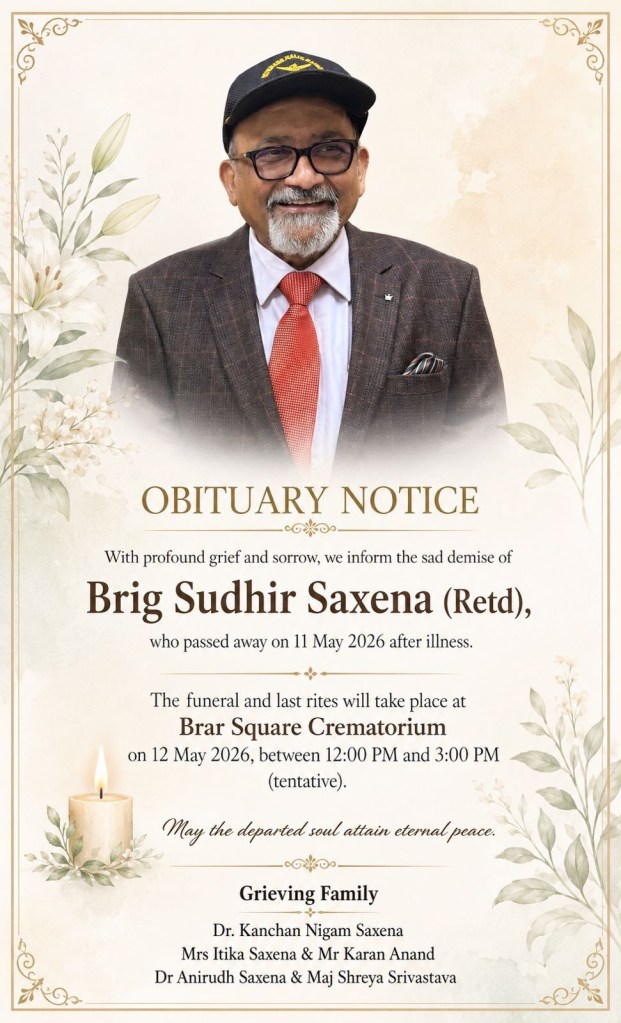
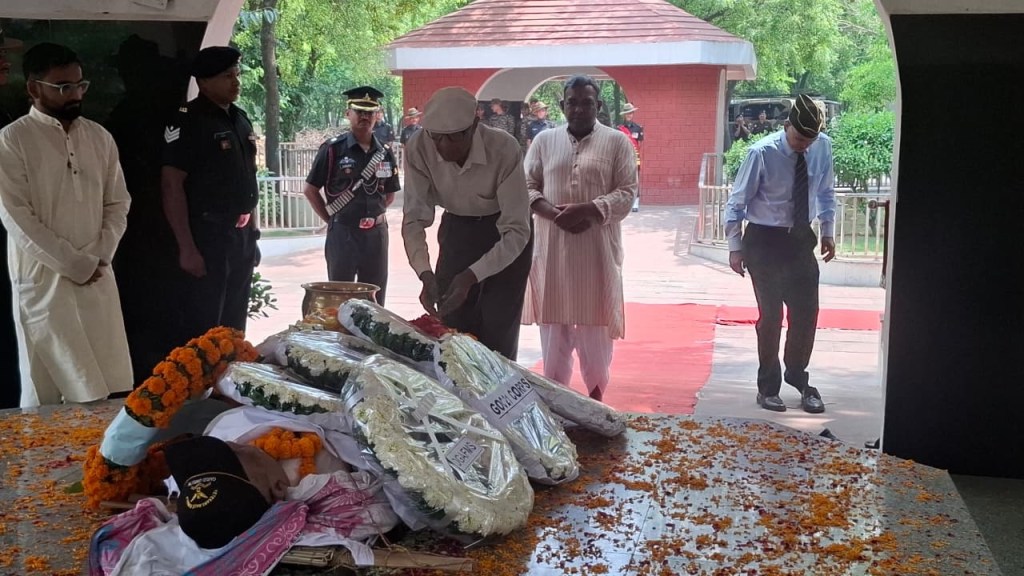
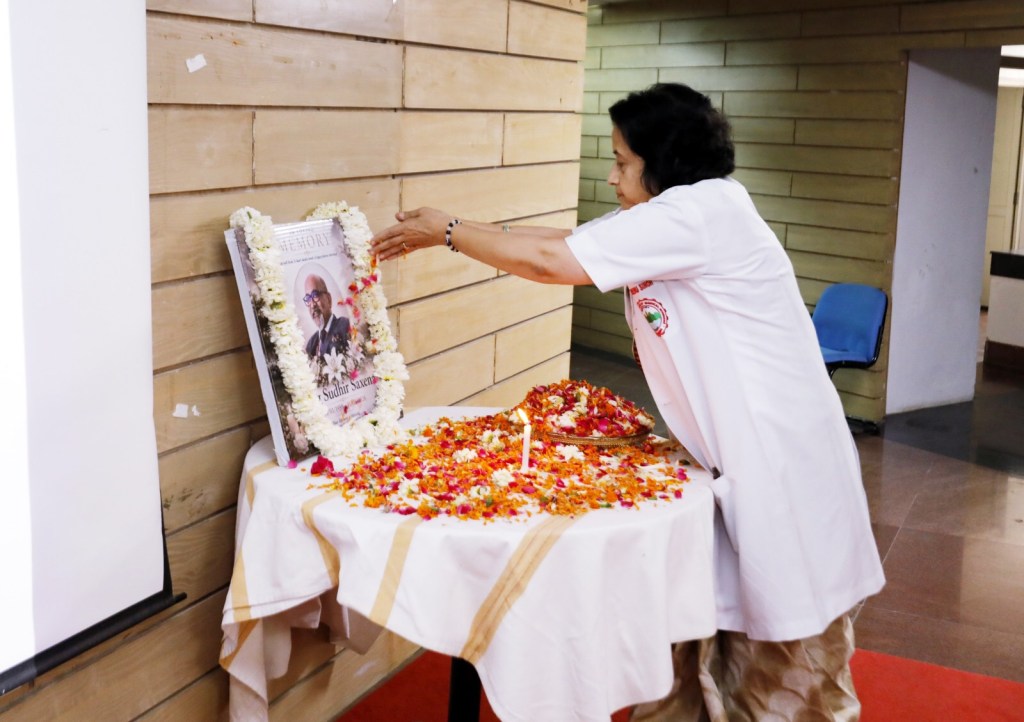
He breathed his last on Monday 11 Th of May 2026 at a Delhi Hospital fighting a brain tumour. He is survived by his wife dr kanchan, Itika and karan; and Anirudh and Shreya.
Sanjay Najhara writes..
Brigadier Sudhir was a true gentleman.
While I had briefly met him on several occasions over the years, it was only about four years ago that I came to know him well, when Sudhir Bhatia and I visited his home for personal reasons. He was very warm in his hospitality — I still remember him personally getting ice for my lemonade.
Another thing, he came to know that I was contemplating buying the same car that he had , Mercedes benj, he took us in his car and explained every feature in detail. Even afterward, he was always ready to help with servicing etc., often reaching out to his contacts in Delhi for me.
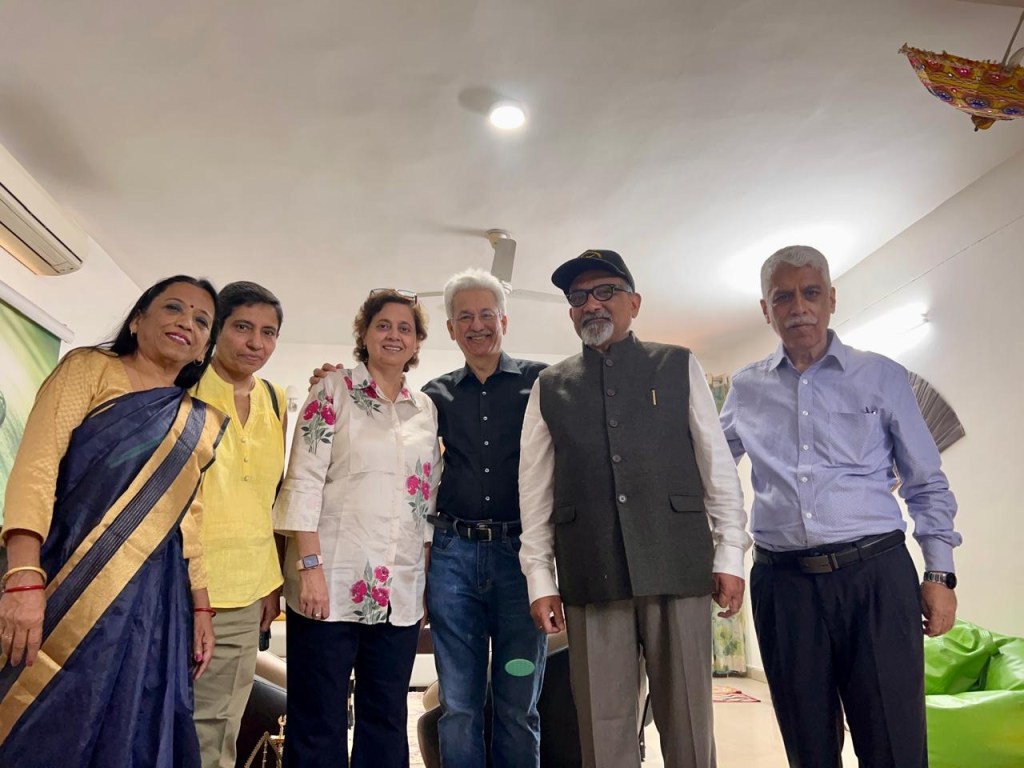
His humility and nature were remarkable. May his noble soul rest in peace.
Raju writes..Brigadier sudhir saxena was a thorough gentle person. I came to know about him when I, personally, visited his place, his hospitality was excellent. The second encounter was when I was admitted in AIIMS Rishikesh and he used to bring the home made breakfast for me. Bhagwan unhe apne charno me sthan de.
Arun writes., anu and myself commented that brig Sudhir is such a sport going around arranging everything,all the nitty grities ,he arranged a spl nightcap afterparty and called us all over,making drinks on his own,pushing us,mingling together.
And this when many spouses /husbands of girls generaly dont like to mingle and stay aloof..
Really set our mind open ,gave an insight into his friendly ,open largesse behaviour,earned a lot of respect for him..and then set the future to think of him in friendly tone.
God give him the best in afterlife
Written by officer Brigadier P P Singh..
It was an inordinately cold winter morning in January 1993. Gwalior was wrapped in dense fog which old soldiers will remember well, the kind where one could barely make out the man walking ten paces ahead, and where even the PT bugle sounded muffled by the mist.
I had just re-joined from a Course and had taken over as Adjutant. As I walked into the office, still carrying the self-importance that young adjutants usually suffer from, I heard a cheerful voice from behind, “Hey, you must be PP Singh!” I turned around to find a smiling officer extending his hand warmly. He was of medium height and unassuming appearance. Slightly balding, with large black spectacles resting prominently on his face, he carried an air of quiet warmth and effortless familiarity. But what actually defined him was his broad, generous smile and a sparkle behind those thick glasses, which reflected the deeply humane person he was beneath the olive-green uniform. Recovering from the surprise, I replied, “Yes, Sir… and you must be Major Saxena.”
That was my first meeting with the officer who would, over the years, become far more than a colleague or unit doctor. He became part of our regimental family. What began with a handshake on a foggy morning slowly transformed into a friendship spanning decades, built on shared hardships, laughter, long conversations, exercises, mess nights, and the countless small moments that only soldiers understand.
Soon, Saxenas were inseparable part of battalion’s professional and social life, particularly in the chaotic bionetwork of bachelor officers. The Paltan had moved to Gwalior after a gruelling tenure at Siachen. We, Young officers felt temporarily liberated from icy bunkers and operational pressures and innately sought excitement and entertainment in the sleepy, semi-urban town. And somehow, Major Saxena became both a guide and an accomplice.
The Commanding Officer had permitted Maj Saxena to pursue post-graduation from Jiwaji Rao Medical College. He attended classes diligently, balancing military duties with academics in a manner only a committed officer could. Many a times, Mrs Saxena would step in to clear the daily sick-report before herself travelling to Jhansi to pursue her work. Before long, many of us bachelors also discovered an intense and sudden “academic interest” in the medical college campus. Occasionally we accompanied him in the name of “medical consultations,” though I must confess that the ailments often appeared disbelievingly cured by merely walking around the college corridors and canteen. Major Saxena understood all this perfectly well.
With his characteristic smile, he tolerated our theatrics with immense patience and amusement. He never judged, never lectured, and somehow managed to combine the discipline of a soldier with the warmth of an elder brother. Before long, we were a part of the weekly college fests and on first name basis with several of his colleagues. Many a times, the Adjutant’s evening report to CO was given from the college’s landline with music blaring in the background.
And then there was the legendary Saxena drawing room. In early nineties, very few officers had the luxury of a landline telephone. Major Saxena’s residence became something of an unofficial communication centre for emotionally vulnerable bachelors. Many romances quietly blossomed in that modest drawing room. Calls from girlfriends in Delhi and Chandigarh would mysteriously arrive there, often at inconveniently convenient hours. One would suddenly find young officers inventing the most creative excuses to “drop by” at Saxena’s house.
The couple took it all in wonderful spirit. Alongside these precious telephone conversations, we also enjoyed their unmatched hospitality with endless cups of tea, warm meals, laughter, and the genuinely affectionate warmth which only a military family can create. For many young officers away from home, their house became a place of comfort, companionship, and occasional emotional rescue.
Through all these years, Mrs. Saxena was far more than merely the lady of the house. She remained his constant companion, standing quietly yet firmly beside him through every phase of life and service. Warm, gracious, and endlessly patient with the never-ending stream of hungry and emotionally confused bachelors descending upon their home, she became an inseparable part of the affection and comfort that the Saxena household represented for all of us. If Brigadier Saxena was the heart of that home, Mrs. Saxena was unquestionably its strength and soul.
During the Gwalior tenure, Major Saxena was more regimental in spirit than many born into the regiment. He participated committedly in our exercises, our celebrations, and even our foolishness. Outdoor camps, route marches, endless field deployments, and long evenings in the officers’ mess created bonds that were impossible to produce artificially. Those were simpler times with no mobile phones, no social media, no distractions but only human companionship, shared challenges and genuine friendships.
When the battalion finally moved out of Gwalior two years later, both Major Saxena and Mrs Saxena came to see us off. There was no dramatic display of emotion, soldiers are not particularly talented at expressing feelings openly. But beneath the smiles and handshakes was the quiet sadness of parting from people who had become family. Unlike many military friendships which get overtaken by postings, field tenures, operational commitments, and the relentless movement of service life, Saxenas never allowed distance to wane relationships. From the mid-1990s right up to 2025, he remained in constant touch with all of us.
Whenever he transited Delhi, meeting him became almost a ritual. Ever the elder brother and impeccable host, he would insist on taking us out, sometimes for dinner, sometimes for a quiet drink at Delhi Gymkhana, and often to meet his wide circle of friends. One could never argue with his generosity. And then there was his unmistakable style. We used to endlessly tease him about his habit of wearing a blazer even during the peak of oppressive Delhi summers, when lesser mortals were struggling merely to survive in shirt sleeves. He would simply smile in that calm, understated manner and say, “That’s my style.” And indeed, it was.
While he developed exceptionally refined tastes in his choice of cuisines, cars and liquor, he appreciated quality without ever being flamboyant about it. There was elegance in the way he carried himself, effortless and natural, without ever trying to impress anyone. But the 1 GR cap remained his permanent signature style.
Perhaps the greatest service he rendered to all of us was something beyond social warmth or hospitality. Long before telemedicine became trendy, Brigadier Saxena had become the unofficial medical lifeline for scores of officers, men and families. No matter where we were posted, one phone call to him was enough. Whether it was our own ailments, our fanilies’ illnesses, or simply confusion over some complicated diagnosis, he was always there with calm advice, reassurance, and guidance. More importantly, he helped us navigate the bewildering maze of military medical bureaucracy, arranging appointments, speaking to specialists, recommending the right hospitals, and quietly helping without ever making it appear like a favour.
Looking back now, one realizes that he spent a lifetime healing not merely bodies, but anxieties. His final great public act, in many ways, reflected the man he always was. During Anirudh’s wedding at Dehra Dun, he remained on his feet almost continuously for nearly forty-eight hours despite already being visibly unwell. Refusing to rest, he personally ensured that every guest felt welcomed, looked after, and embraced by the warmth of Saxena hospitality. I remember writing about it then itself, marvelling at the energy, grace, and commitment with which he carried himself despite obvious physical and medical strain. That was Brigadier Saxena, for whom duty, affection, and hospitality always came before personal discomfort.
We saw his gradual and visible decline. The last time I met him was on 8 November last year at a wedding. It was deeply unsettling to see him a pale shadow of his once boisterous, energetic, and vibrant self. The familiar warmth in the smile remained, but the body which had once carried so much energy, elegance, and presence seemed tired and diminished. We all realized that an era was quietly drawing to a close.
Today, as I reflect upon his passing, memories return with extraordinary clarity — the foggy Gwalior mornings, the laughter in the mess, the medical college escapades, the legendary drawing room conversations, the Delhi Gymkhana evenings, the blazer in unbearable summers, the reassuring medical advice over countless telephone calls, and above all, the warmth of a man who brought dignity, kindness, humour, and humanity wherever he went.
There are many lessons one learned from Brigadier Saxena, but perhaps the greatest among them was perseverance combined with quiet grace. Whatever he undertook, whether as a doctor, officer, student, friend, or family man, he did with complete sincerity and unwavering commitment. He possessed that increasingly rare quality of making people feel comfortable and valued in his presence.
The years have passed, postings have changed, faces have faded, and many comrades have marched on to the final roll call. But occasionally, there comes an officer who is remembered for something far more enduring, the simple goodness of his character. To many of us, Brigadier Saxena will remain exactly that. Somewhere in the eternal officers’ mess above, I can almost imagine Brigadier Saxena smiling that same familiar smile and saying once again:
“Hey, you must be PP Singh.”


 deemagclinic
