
Dr. Geoffrey D. Lehmann—affectionately remembered as “Dr. Lehman” across the Doon Valley—was no distant saint in a white coat. He was a London-born farm boy turned engineer-turned-doctor who traded the comforts of Oxford and Liverpool for dusty roads, monsoon floods, and the cries of patients who had never seen a stethoscope. His story is one of stubborn faith, sleepless nights, and a love that refused to stay polite. Here it is, human and alive, with the voices that shaped the Herbertpur Christian Hospital (still beating strong near Dehradun today).
The Boy Who Didn’t Want to Be a Missionary
Born on 12 January 1904 near London’s Alexandra Palace, young Geoffrey grew up on a Nottinghamshire farm surrounded by chickens, cows, and the smell of hay. His parents dragged him to the Children’s Special Service Mission, where missionaries from far-off lands would visit. One evening a tall Scandinavian visitor spoke of jungle hospitals. Twelve-year-old Geoffrey folded his arms.
“Mum, I’m never becoming one of those,” he muttered later that night. “They make children sit too straight and talk only about God.”
But seeds, once planted, have a way of growing in the dark.
He studied civil and mechanical engineering at Oxford, earned his BSc, then—almost on a whim—switched to medicine at Liverpool University. He interned at Manhattan’s Eye, Ear and Throat Hospital under Dr. Chester Mayo, learning corneal grafts in Boston, and later mastered tropical medicine. Eyes and fevers would become his lifelong languages.
Monica: The Girl Who Knew First
At age twelve, on a family holiday, Geoffrey met a bright-eyed Anglo-Indian girl named Monica Allen. She was born in Nainital, raised in Kanpur, and already dreaming of returning to India as a missionary.
Years later, at the Keswick Convention, Geoffrey sat under the Himalayan pines of the spirit and felt the call himself. He wrote to Monica, half-joking, half-terrified:
“Remember that bossy girl from holiday? God just told me I’m supposed to marry her and go to India. Fancy that?”
They married in 1933. In 1934, the young couple sailed for India. Monica, who already spoke fluent Hindustani, laughed when Geoffrey stumbled over his first sentences.
“Geoffrey, you sound like a British officer ordering tea,” she teased. “Patients will think you’re here to collect taxes, not heal them!”
Kachhwa Days: Learning the Hard Way
They joined Kachhwa Christian Hospital near Varanasi. Mornings: operations. Afternoons: endless check-ups. Evenings: language study by kerosene lamp. They sold Christian booklets for a few annas—not to make money, but so villagers felt they were buying something valuable.
One humid evening, Monica found Geoffrey staring at a railway map of northern India, tracing lines with his finger.
“Monica,” he said quietly, “look at this speck—Herbertpur. Forty kilometres from the nearest station. No allopathic doctor for miles. Only vaids and hakims. And… no one has ever preached the Gospel there.”
Monica leaned over his shoulder. “Then that’s where we’re going, isn’t it?”
“Only if the Holy Spirit says yes,” he replied, half-prayer, half-promise.
They visited. The dirt road from Dehradun’s Indian Military Academy was rutted and wild. No electricity. No proper roads. But the hills felt like home.
The Verandah Clinic and the Three Tea Estates
In November 1936 they began in a borrowed tea-planter’s bungalow. Every morning the verandah became a clinic. Villagers walked hours carrying sick children, old mothers with clouded eyes, farmers doubled over with TB.
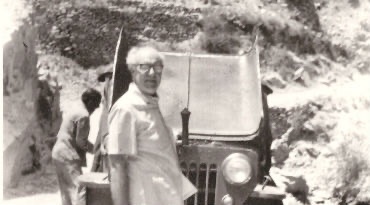
A grizzled farmer with milky cataracts shuffled forward one dawn. “Doctor Sahib,” he said, voice cracking, “I have worked these fields for forty years. Now I cannot see my own hands. My children say I am useless. Can you…?”
Geoffrey examined him gently. “Bhaiya, I will try. But it will take time. And while you wait, let me tell you about the One who gives sight to the blind in more ways than one.”
The farmer grunted. “First fix the eyes. Then we’ll talk about your God.”
Geoffrey smiled. “Fair enough.”
Meanwhile, he spotted a plot where three tea estates met—prime land, perfect location. He bought it. With his own hands and whatever local labour he could pay, he began building what villagers soon called “Lehmann Hospital.”
War, Eyes, and the Only Doctor
World War II pulled Geoffrey into the Indian Army Medical Corps. The hospital nearly closed for a year. When he returned, the queues were longer than ever.
Eye diseases were rampant. Geoffrey went back to England, qualified as an ophthalmologist, then returned to start famous eye camps. Patients streamed down from Tehri Garhwal and Uttarkashi—some walking days with TB-ravaged lungs just to reach him.
One exhausted mother from the hills clutched her blind child. “Doctor Sahib, the hakims said it is karma. Is your God stronger than karma?”
Geoffrey, sweat dripping under the operating theatre lamp, answered softly while suturing, “Your child will see again. And yes—my God is stronger than karma. He is love that refuses to stay away.”
He operated alone for most of forty years in a 120-bed hospital that grew from a few rooms to wards, theatres, and a TB block. Patients arrived from Delhi and Chandigarh. The Bible verse on the front wall said it all: “Preach the Kingdom of God and heal the sick” (Luke 9:2).
Opposition came too. Arya Samaj protesters shouted outside. The District Magistrate warned him once: “Doctor, if you keep preaching while treating, I will shut you down. You are taking advantage of the sick.”
Geoffrey looked him in the eye. “Sir, I treat first. Always. But I will not send a soul away without hope for both body and spirit. If that closes the hospital, then so be it.”
The hospital stayed open.
The Handover and the Last Request
By 1973, grey-haired and tired, Geoffrey and Monica knew it was time. On 1 July he joyfully handed “Lehmann Hospital” to the newly formed Emmanuel Hospital Association (EHA)—an Indian-led mission.
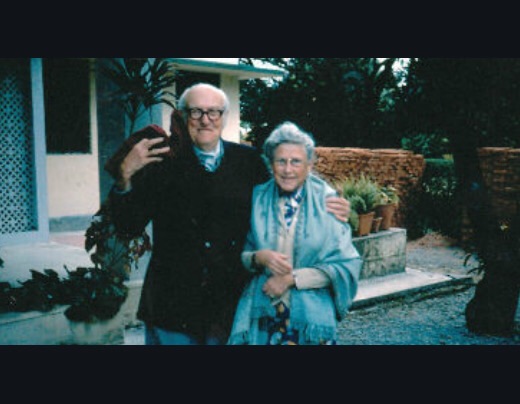
To the new team he gave his final charge, voice steady but eyes shining:
“No patient must ever be turned away because they cannot afford treatment. And no patient must ever leave this hospital without hearing about the love of Jesus Christ.”
Legacy in the Hills
Geoffrey D. Lehmann passed away on 15 April 1994. Monica followed later. Their children—Priscilla, Petronella, Donald, and Susana—were partly raised in the Doon Valley before being sent to school in England because Herbertpur had none.
Today the 120-bed Herbertpur Christian Hospital still stands at the foothills of the Himalayas. Eye camps continue. A nursing school thrives. The Lehmann Community College trains local youth. And the promise remains: heal the body, speak to the soul, never turn anyone away.
Dr. Geoffrey Lehmann didn’t just build a hospital. He built a heartbeat in the hills—one consultation, one prayer, one restored sight at a time.
If you ever drive the old road from Dehradun toward Herbertpur, look for the white buildings where three tea estates once met. Listen carefully. You might still hear the echo of a British doctor’s voice saying to a frightened patient in broken Hindustani:
“Bhaiya, don’t be afraid. We will fix what we can see… and trust God for what we cannot.”


 deemagclinic
