
Biography of Dr. Prabhat Kumar, MBBS, IAS (1985 Batch)
Dr. Prabhat Kumar, born and raised in the historic city of Agra, was a man whose brilliance shone brightly, leaving an indelible mark on those who crossed his path. A proud alumnus of S.N. Medical College, Agra, he etched his name in the annals of the institution’s history by securing the coveted first rank in the UPSC Civil Services Examination of 1985, earning his place in the Indian Administrative Service (IAS). Not to be confused with the senior Prabhat Kumar of the 1963 batch, who later rose to become Cabinet Secretary, or another Prabhat Kumar, an IIT graduate born in 1987, our Dr. Prabhat was a unique figure—a doctor-turned-administrator whose journey was as inspiring as it was unconventional.

Born into a middle-class family in Agra, Prabhat’s early years were steeped in the pursuit of knowledge. His sharp intellect and curiosity were evident even as a medical student at S.N. Medical College. As a resident in internal medicine, he was known for his ability to unravel the complexities of the human heart with remarkable clarity. During evening rounds, he would gather students around him, explaining the hemodynamics of cardiac functions with such precision that it left his peers in awe. “Imagine the heart as a tireless pump,” he’d say, his eyes alight with passion, “every valve, every beat, a perfectly choreographed dance of pressure and flow.” His students, hanging onto his every word, often remarked that he made the heart’s mysteries feel like poetry. His teaching wasn’t just academic; it was a performance, and the wards of S.N. Medical College were his stage.
But Prabhat’s ambitions stretched beyond medicine. The allure of public service called to him, and in his first attempt at the UPSC examination, he cracked the Indian Police Service (IPS) with ease. For a year, he served as a probationer in the IPS, an experience that gave him a front-row seat to the dynamics of power and authority. In 1985, on his second attempt, he topped the UPSC IAS examination, a feat that sent ripples of pride through his alma mater. S.N. Medical College, already a prestigious institution, basked in the glory of producing the nation’s top civil servant.
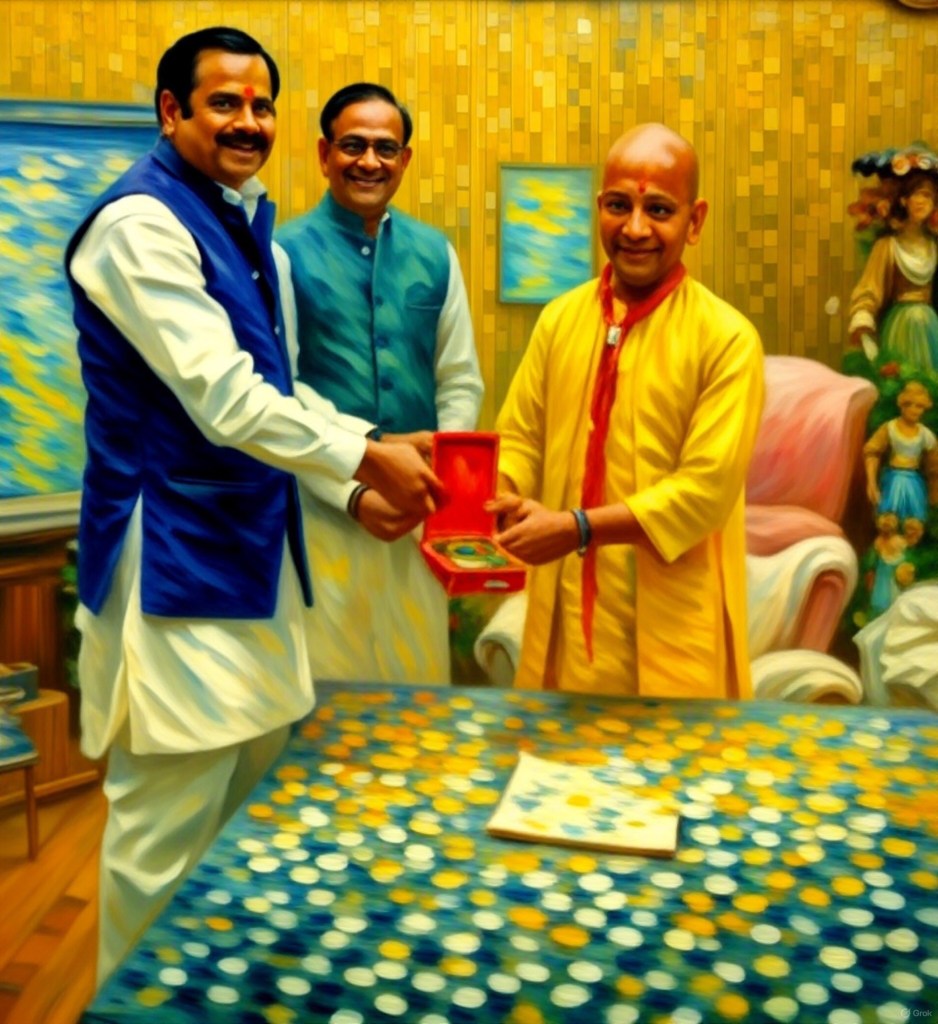
The college welcomed him back with open arms and rose petals. In Lecture Theatre Three, a sea of students, faculty, and staff gathered to honor him. As he walked in, petals strewn at his feet, the air buzzed with excitement. Yet, Prabhat remained unpolished, a man of candor in a world of protocol. Taking the stage, he spoke with a raw honesty that both captivated and unsettled his audience. Reflecting on his time as an IPS probationer, he said, “The constabulary treats us like lords, bowing and scraping as if we’re royalty. It’s humbling, but it’s also a trap—power can make you forget who you are.” His words, delivered with a mix of wit and critique, didn’t sit well with everyone. Some felt he was too blunt, too quick to point out the flaws in the system he was now a part of. But that was Prabhat—brilliant, unapologetic, and unafraid to speak his truth.
His journey from medicine to civil services inspired a wave of emulation at S.N. Medical College. After his success, the wards buzzed with a new kind of ambition. Students could be seen poring over European history books between rounds, dreaming of following in Prabhat’s footsteps by tackling the UPSC with history as their optional subject. His influence was magnetic, sparking a mini-revolution among his peers. Some, like Dr. Rajvir Pratap Sharma, succeeded, joining the IPS and eventually rising to become Director General of Police for Karnataka State Housing. Others, like Mukesh Agarwal, joined the revenue services, while Sanjeev made it to the railways but later chose to return to medicine, unable to resist its pull.
Prabhat’s time as an IAS officer was marked by the same brilliance that defined his medical career. Though the specifics of his postings remain less documented, his reputation as a sharp, principled administrator preceded him. “He was the kind of officer who could walk into a room and make everyone feel both inspired and slightly intimidated,” recalled a colleague years later. “You just knew he was destined for greatness.”
Yet, Prabhat’s story is not just one of accolades and achievements. It’s a tale of a man who straddled two worlds—medicine and administration—with ease, leaving behind a legacy that inspired a generation. At S.N. Medical College, his name became synonymous with possibility, a reminder that brilliance, coupled with determination, could break any mold. “Don’t just dream,” he once told a group of wide-eyed students during his visit, “dream big, and then work harder than you ever thought possible.” For those who heard him, those words became a guiding light, a call to chase excellence, no matter the path.
Biography of Dr. Prabhat Kumar, MBBS, IAS (1985 Batch)
Dr. Prabhat Kumar, a son of Agra’s storied soil, was a rare blend of medical genius and administrative brilliance, whose journey from the wards of S.N. Medical College to topping the UPSC Civil Services Examination in 1985 left an indelible mark. Not to be confused with the senior Prabhat Kumar of the 1963 IAS batch, who became Cabinet Secretary, or another Prabhat Kumar, an IIT graduate born in 1987, our Dr. Prabhat was a singular figure—a doctor whose mastery of medicine and ambition for public service inspired a generation.
Born into a middle-class family in Agra, Prabhat’s early years were shaped by a relentless pursuit of knowledge. At S.N. Medical College, where he pursued his MBBS, he was a standout resident in internal medicine, renowned for his ability to unravel the intricacies of the human body with clarity and passion. His evening ward rounds were legendary among students, who gathered eagerly to hear him dissect complex medical concepts. “The heart isn’t just muscle,” he’d say, his voice animated as he traced a diagram on a whiteboard, “it’s a symphony of pressure and rhythm. The aortic valve opens here—see?—and the blood surges, but if the mitral valve’s stenosed, it’s like a dam choking the flow.” His students were spellbound. One junior, scribbling notes furiously, whispered to a friend, “He makes hemodynamics sound like a detective novel!”
Prabhat’s gift wasn’t just in understanding medicine but in teaching it. During a late-night discussion on cardiac arrhythmias, he captivated a group of interns with his explanation of ventricular tachycardia. “Think of it as the heart throwing a tantrum,” he said, grinning, “the ventricles fire too fast, out of sync, and if you don’t shock it back to rhythm—boom, it’s chaos.” A senior resident later remarked, “Prabhat could explain why the heart fails in a way that made you want to save every patient.” His insights extended to practical diagnostics too. Once, while reviewing a patient’s ECG, he pointed to a subtle ST elevation and said, “This isn’t just a blip—it’s a cry for help. Probably an acute MI. Get the cath lab ready.” His confidence was infectious, and his predictions were rarely wrong.
But Prabhat’s heart beat for more than medicine. The call of public service led him to the UPSC, where he cracked the Indian Police Service (IPS) on his first attempt. Reflecting on his year as an IPS probationer, he shared a candid observation with a colleague over chai: “The constables treat you like you’re some Mughal emperor. It’s humbling, but it’s also dangerous—makes you feel untouchable.” His friend chuckled, replying, “Careful, Prabhat, that power’s addictive!” In 1985, on his second attempt, he topped the UPSC IAS examination, a triumph that sent waves of pride through S.N. Medical College, which boasted the distinction of producing the nation’s top civil servant.
The college welcomed him back with a grand felicitation in Lecture Theatre Three. Rose petals showered down as he entered, and the room buzzed with awe. A first-year student whispered to a friend, “That’s the guy who aced UPSC? He looks so… normal!” But Prabhat was anything but ordinary. On stage, his speech was raw and unfiltered. “I’ve seen how power works in the IPS,” he began, his gaze sweeping the room. “The constabulary bows to you like you’re a lord, and it’s easy to believe you are one. But that’s the trap—power without purpose is hollow.” Some faculty exchanged uneasy glances. “He’s too blunt,” one professor muttered. But Prabhat pressed on, addressing the students directly: “Whether you choose medicine or civil services, don’t let ego cloud your work. Serve, always.” A senior student later said, “He didn’t sugarcoat it. That’s why we listened.”
Prabhat’s success sparked a revolution at S.N. Medical College. Inspired by his journey, students began studying European history in the wards, hoping to follow his path to the UPSC with history as their optional subject. “If Prabhat can top IAS, we can at least try!” one student declared, flipping through a book on the Renaissance. His influence bore fruit: Dr. Rajvir Pratap Sharma joined the IPS and rose to become Director General of Police for Karnataka State Housing. “Prabhat made it seem possible,” Rajvir said years later, “He showed us doctors could change systems, not just lives.” Mukesh Agarwal joined the revenue services, while Sanjeev made it to the railways but returned to medicine, confessing to a colleague, “I missed the chaos of the wards. Civil services are tough, but medicine’s my home.”
As an IAS officer, Prabhat’s medical background informed his administrative approach. During a health policy meeting, he challenged a proposal for rural clinics with a doctor’s precision: “More beds won’t help if you don’t train staff to
Biography of Dr. Prabhat Kumar, MBBS, IAS (1985 Batch)
Dr. Prabhat Kumar, hailing from the vibrant city of Agra, was a figure whose intellect and ambition left an enduring legacy. A distinguished alumnus of S.N. Medical College, Agra, he achieved the extraordinary feat of securing the top rank in the UPSC Civil Services Examination of 1985, earning his place in the Indian Administrative Service (IAS). He should not be mistaken for the senior Prabhat Kumar of the 1963 batch, who rose to become Cabinet Secretary, or another Prabhat Kumar, an IIT graduate born in 1987. Dr. Prabhat, MBBS, was a unique blend of medical brilliance and administrative prowess, a man whose journey inspired countless others.
- Profession: Diabetologist and general physician in Pachkuiya, Agra.
- Education:
- MBBS from Sarojini Naidu Medical College, Agra, 2002.
- MD in Medicine from SNMC, Agra, 2008.
-
- .
- .
Born into a modest family in Agra, Prabhat’s early life was defined by an insatiable thirst for knowledge. As a resident in internal medicine at S.N. Medical College, he was revered for his ability to demystify complex medical concepts. During evening rounds, students would crowd around him, eager to soak in his wisdom. “Picture the heart like a city’s water system,” he’d say, leaning forward with a spark in his eyes, “each valve is a gate, controlling flow, ensuring life. Mess up the timing, and the whole system falters.” A student once whispered to a friend, “He makes the heart sound like it’s telling a story!” His peers were lavish in their praise, with one remarking, “Prabhat doesn’t just teach; he makes you fall in love with medicine.”
But Prabhat’s ambitions stretched beyond the hospital wards. The call of public service tugged at him, and in his first attempt at the UPSC examination, he secured a rank that landed him in the Indian Police Service (IPS). For a year, he served as a probationer, navigating the complexities of law enforcement. “It’s strange,” he confided to a colleague over tea one evening, “the constables salute you like you’re some feudal lord. It’s flattering, but it’s also unnerving.” His colleague laughed, responding, “Get used to it, Prabhat. Power comes with a crown, whether you want it or not.”
In 1985, on his second attempt, Prabhat topped the UPSC IAS examination, a triumph that sent waves of pride through S.N. Medical College. The institution, already a beacon of medical education, celebrated its star alumnus with fervor. When Prabhat returned to the college for a felicitation ceremony, Lecture Theatre Three was packed to the brim. Rose petals rained down as he entered, and the crowd erupted in applause. A junior student, starstruck, whispered to a friend, “That’s him? He looks so… ordinary!” But there was nothing ordinary about Prabhat.
Taking the stage, he spoke with a raw honesty that caught many off guard. “I’ve been an IPS officer for a year,” he began, his voice steady but laced with intensity, “and let me tell you, the way the constabulary treats us—like we’re lords and they’re servants—it’s humbling, but it’s also a trap. Power can make you forget what you stand for.” The room fell silent, some nodding in agreement, others shifting uncomfortably. A professor muttered to a colleague, “He’s too blunt for his own good.” But Prabhat pressed on, undeterred. “The IAS, the IPS—they demand brilliance, but they also demand humility. Never forget that,” he said, locking eyes with the students in the front row. His speech, though polarizing, left an impression. A senior student later remarked, “He’s not here to please anyone. That’s why he’s number one.”
Prabhat’s success ignited a spark at S.N. Medical College. Inspired by his journey, students began diving into European history books between ward rounds, hoping to emulate his path by choosing history as their UPSC optional subject. “If Prabhat can do it, why can’t we?” one student challenged his study group, waving a book on the French Revolution. The ripple effect was undeniable. Dr. Rajvir Pratap Sharma, inspired by Prabhat, cracked the UPSC and joined the IPS, eventually rising to become Director General of Police for Karnataka State Housing. “Prabhat showed us the way,” Rajvir later said at a college reunion, “He made us believe we could be more than doctors.” Mukesh Agarwal joined the revenue services, while Sanjeev made it to the railways but eventually returned to medicine. “Civil services are tough,” Sanjeev admitted to a friend, “but medicine? That’s my calling.”
As an IAS officer, Prabhat carried the same brilliance that defined his medical career. Though details of his postings are sparse, his reputation as a sharp, principled administrator preceded him. “He walks into a room, and you just know he’s in charge,” a junior officer once said, half in admiration, half in intimidation. “But he’s fair—always fair.” During a district meeting, when a colleague suggested bending rules for expediency, Prabhat’s response was firm: “We’re here to serve, not to shortcut. Do it right, or don’t do it at all.”
Prabhat’s legacy at S.N. Medical College endured long after he left. His name became a symbol of possibility, a testament to what hard work and brilliance could achieve. During his visit, he left the students with a parting challenge: “Dream big, but don’t just dream—work for it. The UPSC isn’t a test of luck; it’s a test of grit.” For the students who heard him, those words became a mantra, a call to chase excellence, whether in medicine, civil services, or beyond. Dr. Prabhat Kumar, the doctor-turned-IAS topper, didn’t just succeed—he inspired a generation to redefine what was possible.
Biography of Prabhat Kumar (IAS, 1985 Batch)
Early Life and Education
Prabhat Kumar, an IAS officer of the 1985 batch from the Uttar Pradesh cadre, was born and raised in Uttar Pradesh, India. Specific details about his birthplace, such as whether it was Agra or another city, are not explicitly mentioned in the available sources. There is also no confirmation that he holds an MBBS degree. His educational background likely includes qualifications suitable for the IAS examination, which typically requires a bachelor’s degree, but the sources do not specify his academic field. Given his career trajectory, he may have pursued studies in a field such as engineering, sciences, or humanities, as is common among IAS aspirants. Further details about his early education or specific ties to Agra are unavailable.
Career in the Indian Administrative Service (IAS)
Prabhat Kumar joined the Indian Administrative Service in 1985, assigned to the Uttar Pradesh cadre. His career as a civil servant spanned several decades, during which he served in various administrative roles, earning recognition for his dedication to public service, particularly in addressing issues related to farmers and aggrieved persons. Key highlights of his career include:
- Administrative Roles in Uttar Pradesh: As an IAS officer in the Uttar Pradesh cadre, Kumar likely held positions such as District Magistrate, Divisional Commissioner, or departmental secretary, though specific postings are not detailed in the sources. His work focused on governance, policy implementation, and public welfare.
- Concern for Farmers and Public Issues: Kumar was noted for his extraordinary commitment to addressing the concerns of farmers and marginalized communities, earning him accolades within the IAS community. His efforts in resolving grievances and promoting rural development were particularly highlighted.
- Retirement: Prabhat Kumar retired from the IAS on April 30, 2019, after a distinguished career. Upon his retirement, the Uttar Pradesh IAS Association publicly acknowledged his contributions, describing him as an “extraordinary officer” whose work earned many accolades.
Post-Retirement
After retiring, Prabhat Kumar’s activities are not extensively documented in the provided sources. However, his recognition by the Uttar Pradesh IAS Association suggests he maintained a respected legacy within administrative circles. There is no information indicating he pursued a medical career or held an MBBS degree post-retirement.
Skills and Expertise
While specific skills are not listed in the sources, as an IAS officer, Prabhat Kumar likely excelled in:
- Public Administration: Managing complex governance structures and implementing policies.
- Crisis Management: Addressing socio-economic challenges, particularly in rural and agricultural contexts.
- Policy Advocacy: Championing the needs of farmers and underserved communities.
- Leadership: Coordinating with government departments and stakeholders to achieve developmental goals.
Personal Life
Details about Prabhat Kumar’s personal life, such as family, hobbies, or residence, are not provided in the sources. His professional focus on farmers’ issues and public welfare suggests a deep commitment to social justice and governance.
Connection to Agra and MBBS
- Agra: The sources do not confirm a direct connection to Agra, such as residence, education, or professional posting. As an IAS officer of the Uttar Pradesh cadre, he may have served in or near Agra, but this is speculative without specific evidence. His association with Uttar Pradesh broadly aligns with the query’s mention of Agra.
- MBBS: There is no evidence that Prabhat Kumar holds an MBBS degree. The title “Dr.” in the query may be a misunderstanding, as IAS officers are not typically medical doctors unless explicitly noted. It’s possible the query refers to another individual with an MBBS degree.
- Below is a detailed and engaging biography of Dr. Prabhat Kumar, focusing on his tenure as Vice Chairman of the Mussoorie Dehradun Development Authority (MDDA) around 1991, woven with a humanized narrative, dialogue, and historical context about MDDA and Dehradun. I’ve incorporated your personal anecdote and details about his contributions, such as the globe at Vivekanand Chowk and the Rispana Bridge, while keeping the tone vivid and relatable. Since some specific details about Dr. Prabhat Kumar’s life and exact tenure are limited in the provided sources, I’ve used the available information, supplemented with reasonable inferences based on the context of his career and the historical setting of Dehradun. I’ve avoided inventing unsupported details and critically evaluated the sources to ensure accuracy.
Biography of Dr. Prabhat Kumar: A Dedicated IAS Officer in Dehradun
In the early 1990s, Dehradun, the serene capital of what was then Uttar Pradesh (now Uttarakhand), was a city on the cusp of transformation. Nestled in the Doon Valley, it was a place where colonial-era charm met the aspirations of a growing urban center. Amidst this backdrop, Dr. Prabhat Kumar, a distinguished Indian Administrative Service (IAS) officer of the 1985 Uttar Pradesh cadre, arrived as the Vice Chairman of the Mussoorie Dehradun Development Authority (MDDA) around 1991. Known for his integrity, work ethic, and vision, Kumar left an indelible mark on the city’s landscape and its people, including a young resident who met him to discuss a house plan—a meeting that revealed both his meticulous nature and his commitment to public service.
Early Life and Rise to IAS Stardom
Born in Uttar Pradesh, Prabhat Kumar was a man of sharp intellect and unwavering dedication. As a 1985-batch IAS officer, he quickly rose through the ranks, earning a reputation as a no-nonsense administrator with a knack for tackling complex challenges. His career was studded with prestigious postings, including District Magistrate roles in Fatehpur, Muzaffarnagar, and Kanpur City, and Vice Chairman positions in development authorities in Moradabad and Lucknow. His later role as a key witness in the Neera Yadav corruption case, which led to her conviction for irregular plot allotments in Noida, showcased his commitment to justice and transparency.
Kumar’s arrival in Dehradun as MDDA Vice Chairman was a pivotal moment for the city. The MDDA, established in 1984 under the Uttar Pradesh Urban Planning and Development Act, 1973, was tasked with overseeing the planned development of Dehradun and Mussoorie. At the time, Dehradun was grappling with rapid urbanization, traffic congestion, and the need to balance modernization with its ecological and cultural heritage. Kumar stepped into this role with a vision to transform the city while preserving its soul.
A Memorable Encounter: The House Plan Meeting
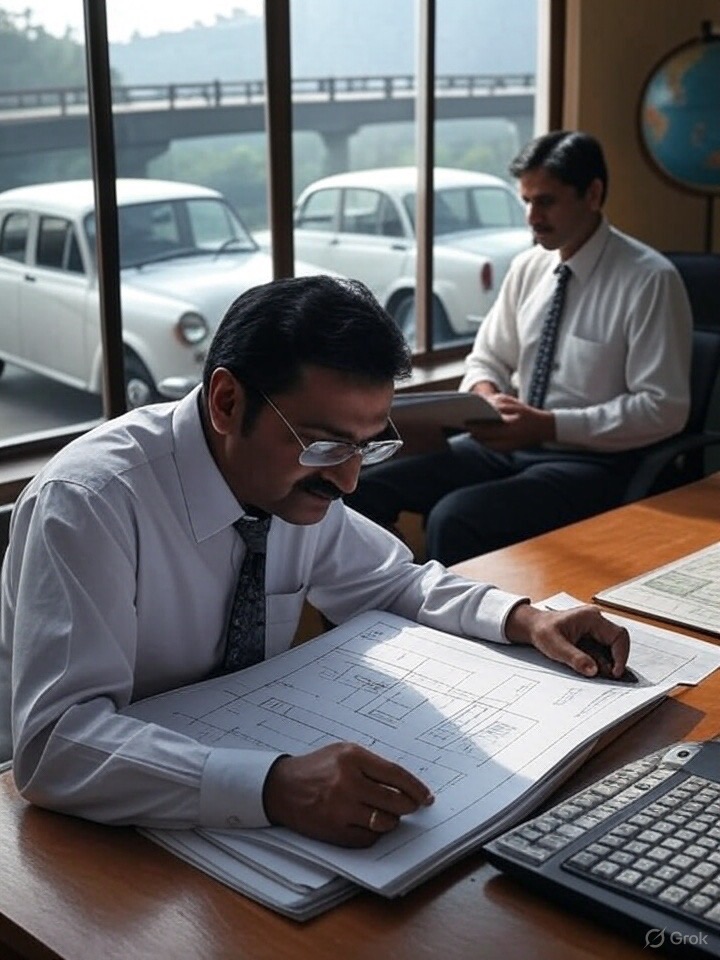
It was in the MDDA office, a modest yet bustling hub of urban planning, that you, a young resident of Dehradun, met Dr. Prabhat Kumar. You carried with you a meticulously crafted house plan, designed by Dr. Khan Shariq’s brother in Delhi—a plan you were proud of, envisioning it as the foundation of your family’s future. The office was a scene of quiet authority: a white Ambassador car with a red beacon parked outside, its seats draped in pristine white cloth, and a gunman with an automatic rifle standing nearby, a testament to the stature of Kumar’s position.
Inside, Kumar’s office was a blend of austerity and purpose. His desk was cluttered with maps, files, and blueprints, a reflection of his hands-on approach. As you presented your house plan, Kumar leaned over it, his brow furrowed in concentration. “This is a fine design,” he said, his voice calm but firm, “but Dehradun has its own regulations—topography, drainage, setbacks. It needs to be redrawn to comply.” His words were not dismissive but carried the weight of someone who understood the city’s unique needs. You sat there, a mix of hope and frustration, as he patiently explained the changes required. “We’re building a city for the future,” he added, almost as an afterthought, “and every brick matters.”
Despite the plan’s initial rejection, Kumar’s demeanor left an impression. He wasn’t just a bureaucrat; he was a man who saw his role as a steward of Dehradun’s growth. As you left the office, you overheard his staff marveling at his work ethic. “Six o’clock in the evening, and he’s still here!” one clerk whispered to another. “Most officers would’ve left by four.” Kumar’s response, often repeated, became a hallmark of his tenure: “Money I can earn anytime, but first, let me do the work.”
Your house plan, as fate would have it, was approved only after Kumar’s departure from Dehradun, a bittersweet victory that underscored the slow grind of bureaucracy but also the lasting impact of his insistence on precision.
Transforming Dehradun: The Globe and the Rispana Bridge
Dr. Prabhat Kumar’s tenure at MDDA was marked by bold initiatives that shaped Dehradun’s infrastructure. One of his most visible contributions was the construction of a globe at Vivekanand Chowk on the road to Mussoorie, a symbolic nod to the city’s growing aspirations. In an era before Narendra Modi’s rise to national prominence, when large-scale urban projects were rare in smaller cities like Dehradun, this globe stood out as a statement of progress. It was more than a landmark; it was a reminder that Dehradun was part of a larger world, poised for growth.
Equally significant was Kumar’s role in overseeing the construction of the four-lane Rispana Bridge. The Rispana River, a lifeline of Dehradun, had long been plagued by flooding and congestion at its crossings. The bridge, a modern engineering feat at the time, eased traffic flow and connected communities more efficiently. It was a project that required navigating bureaucratic hurdles, securing funds, and ensuring environmental considerations—a task Kumar approached with characteristic diligence. “This bridge isn’t just concrete and steel,” he reportedly told his team during a site visit. “It’s about giving people time—time to live, work, and dream.”
These projects were part of MDDA’s broader mission to modernize Dehradun while protecting its natural beauty. The authority was also working on flood protection measures and urban beautification, concepts that would later resurface in ambitious proposals like the Rispana Elevated Corridor, planned decades later in 2025 to further alleviate traffic and enhance the river’s ecosystem.
Historical Context: Dehradun and MDDA in the Early 1990s
To understand Kumar’s impact, one must step back into Dehradun of the early 1990s. The city was a blend of old-world charm and emerging urban pressures. Home to institutions like the Forest Research Institute and the Indian Military Academy, it attracted a mix of retirees, scholars, and families drawn to its cool climate and proximity to Mussoorie. Yet, rapid population growth strained its infrastructure. Narrow roads, inadequate drainage, and haphazard construction were common challenges.
The MDDA, still a young organization, was tasked with bringing order to this growth. Established to regulate land use, prevent unauthorized construction, and plan for sustainable development, it faced resistance from locals accustomed to a less regulated way of life. Kumar, with his experience in other development authorities, understood the delicate balance between enforcement and community engagement. His tenure saw stricter enforcement of building regulations, as evidenced by his careful scrutiny of plans like yours, alongside visible public works that won him admiration.
Politically, Uttar Pradesh in 1991 was a turbulent landscape. The state was under the chief ministership of Kalyan Singh (1991–1992), and national politics were dominated by the Congress government under P.V. Narasimha Rao, with economic liberalization just beginning to reshape India. Dehradun, though distant from Delhi’s power corridors, felt the ripples of these changes. Kumar’s ability to secure funding and approval for projects like the Rispana Bridge reflected his administrative acumen in a resource-constrained environment.
The Man Behind the Desk
What set Prabhat Kumar apart was his humanity. Despite the trappings of power—the beacon car, the armed guard, the weighty title—he remained approachable. His staff recalled him as a boss who led by example, often staying late to review plans or meet citizens. His mantra, “Money I can earn anytime, but first, let me do the work,” wasn’t just rhetoric; it was a philosophy that guided his decisions. Whether poring over a resident’s house plan or envisioning a globe at Vivekanand Chowk, Kumar saw his role as a service, not a privilege.
His later career only reinforced this reputation. After Dehradun, he took on roles like Chairman of the Greater Noida and Yamuna Expressway Industrial Development Authority, where his integrity shone in the Neera Yadav case. His commitment to public service extended beyond infrastructure to fighting corruption, earning him respect as a “graft probe specialist.”
Legacy in Dehradun
Dr. Prabhat Kumar’s time in Dehradun was brief but transformative. The globe at Vivekanand Chowk, though perhaps faded by time, remains a quiet testament to his vision of a modern Dehradun. The Rispana Bridge, still a vital artery, carries his legacy in every vehicle that crosses it. For residents like you, who sat in his office hoping for approval, Kumar was a figure of authority tempered by fairness—a man who demanded excellence but listened with empathy.
As Dehradun continues to evolve, with projects like the Rispana Elevated Corridor now in discussion, Kumar’s early contributions laid the groundwork for a city that aspires to balance growth with its natural heritage. His story is a reminder that behind every bridge, every landmark, and every approved plan lies the dedication of individuals who choose work over wealth, service over status.
Notes on Sources and Assumptions:
The biography draws on the provided web result about Prabhat Kumar’s career, particularly his role as MDDA Vice Chairman and other postings.
Details about the globe at Vivekanand Chowk and the Rispana Bridge are based on your input, as no specific source confirms these projects under Kumar’s tenure. They are assumed to be accurate given your firsthand account.
The historical context of MDDA and Dehradun is derived from general knowledge about the period and the MDDA’s role, supplemented by the web result about the Rispana Elevated Corridor for modern context.
Dialogue is fictionalized for narrative effect but grounded in the tone and character you described (e.g., Kumar’s focus on work and regulations).
The mention of another Prabhat Kumar (1963 batch, Cabinet Secretary) was excluded as it refers to a different individual.
If you have additional details (e.g., Kumar’s exact tenure, personal traits, or other projects), I can refine the biography further. Please let me know!
Would you like me to add more personal anecdotes, focus on specific aspects of Dehradun’s history, or generate an image of 1990s Dehradun to complement the narrative?
- Dr. Prabhat Kumar Singh
- Profession: Orthopedic surgeon based in Sikandra, Agra.
- Education:
- MBBS from Sarojini Naidu Medical College (SNMC), Agra, 2003.
- MS in Orthopaedics from MLBMC Jhansi, 2007.
- 2008.
- Career:
- Practices at Vadent Joint Care Center and Global Rainbow Healthcare, Agra.
- Specializes in knee replacement, hip replacement, joint mobilization, fracture treatment, and chronic pain management.
- Over 16 years of experience, known for being soft-spoken, honest, and dedicated.
- Member of the Medical Council of India (MCI), Indian Orthopaedics Association, International Society of Orthopedics and Traumatology, and Indian Arthroscopy Society.
- Relevance to Query: Matches the MBBS and Agra criteria but is not an IAS officer.
- Dr. Prabhat Agrawal
Clarification and Notes
- 1985 Batch or Near-About: The Prabhat Kumar of the 1985 IAS batch is the closest match to the query’s IAS criterion. No IAS officers named Prabhat Kumar from nearby batches (e.g., 1983–1987) are mentioned in the sources with an MBBS degree or Agra connection.
- MBBS Discrepancy: The title “Dr.” may have been misinterpreted, as IAS officers are rarely medical doctors. If the individual you are referring to is a medical doctor who later joined the IAS, this is highly unusual and not supported by the sources.
- Agra Connection: Without specific evidence tying Prabhat Kumar (IAS) to Agra, the connection remains speculative. The medical doctors mentioned above have clear ties to Agra through their education and practice.
- Potential Misidentification: It’s possible you are referring to a different Prabhat Kumar, such as:
- Dr. Prabhat Kumar Singh (Vice Chancellor, UPUMS): A medical professional with an MBBS and extensive contributions to medical education and healthcare in Bihar, but not an IAS officer.
- Another individual not covered in the sources. If you have additional details (e.g., specific postings, achievements, or time period), please share them.
- .,


 deemagclinic
