
Born in the early 1960s in a modest family in Uttar Pradesh, Girish Mishra grew up with a spark of curiosity and a deep sense of responsibility. His father, a school teacher, often said, “Knowledge is the key to changing the world, beta.” Little Girish took those words to heart, excelling in school and dreaming of becoming a doctor to help those in need. “One day, I’ll heal people and make my family proud,” he’d tell his siblings while pretending to examine them with a toy stethoscope.
Early Life and Medical College Years
Dr. Girish Mishra was born on January 1, 1960—a date as straightforward and memorable as the man himself—in the quaint town of Amroha, Uttar Pradesh. Growing up in a traditional Brahmin family, Girish embodied the values of discipline, humility, and intellectual pursuit from a young age. His sharp mind led him to crack the Combined Pre-Medical Test (CPMT), securing his spot at the prestigious SN Medical College in Agra, where he would spend a formative decade from 1979 to 1989.
Arriving at the GB Pant Hostel as a fresh-faced first-year student, Girish made quite the subtle impression. Hidden beneath his neatly combed hair was a “shikha,” the traditional pandit’s tuft, wound discreetly so it wasn’t the first thing you’d notice. “Hey, Mishra,” his classmate Dr. PK Gupta recalls with a chuckle, “when you showed up with that bundle on your head, I thought you were just another skinny guy from the village. But man, you had some hidden strength!” Indeed, despite his thin, almost emaciated frame, Girish proved to be a force in unexpected ways. During late-night hostel antics, he’d challenge Gupta to arm wrestling matches. “Come on, PK, let’s see what you’ve got!” Girish would grin, pinning his friend’s arm down with surprising ease. “How does a vegetarian like you pack that much power?” Gupta would laugh, shaking his sore wrist.
Life in the hostel was a mix of rigorous studies and youthful adventures. In 1981, the duo signed up for roller skating lessons held on a payment basis in the old surgical building—a quirky setup that turned the sterile halls into a makeshift rink. “Watch this, PK!” Girish would call out, gliding smoothly after just a few sessions, his balance as steady as his teetotaler lifestyle. A pure vegetarian who never touched alcohol, Girish lived by a code of simplicity and respect. He addressed everyone with impeccable courtesy, whether in letters or conversations, never stooping to harsh words. “Even when things got tough,” Gupta shares, “Girish would say, ‘Let’s handle this with grace, my friend.’ He was the calm in our storm.”
The initiation into college life wasn’t all smooth skating, though. Like many newcomers, Girish and Gupta endured ragging together, often at the hands of the formidable Madam Tan. “Stand straight, boys! This isn’t your village playground,” she’d bark during those sessions, except that she was he. Huddled afterward, Girish would whisper to Gupta, “We’ll get through this, PK. Just keep smiling.” Those shared trials forged a bond that lasted beyond their MBBS days, turning classmates into lifelong friends.
Through it all, Dr. Mishra’s unassuming demeanor hid a resilient spirit, setting the foundation for his distinguished career in medicine.
In 1979, at the age of 19, Girish stepped into the bustling halls of Sarojini Naidu Medical College in Agra, a place buzzing with ambitious young minds. That’s where he met you, his batch mate, during those formative years from 1979 to 1985. Remember the late-night study sessions in the hostel? “Hey, pass the anatomy book! If we don’t crack this exam, we’ll be dissecting frogs forever,” Girish would joke, his laughter echoing through the room as you both pored over textbooks under dim lights. He was the one who organized group discussions, always encouraging the group: “Come on, team—we’re in this together. Medicine isn’t just about books; it’s about saving lives.” His enthusiasm was infectious, balancing rigorous classes with cricket matches on the college ground and occasional trips to the Taj Mahal for a break. “Look at this wonder,” he’d say, gazing at the monument. “If humans can build something so eternal, imagine what we can do for people’s health.”
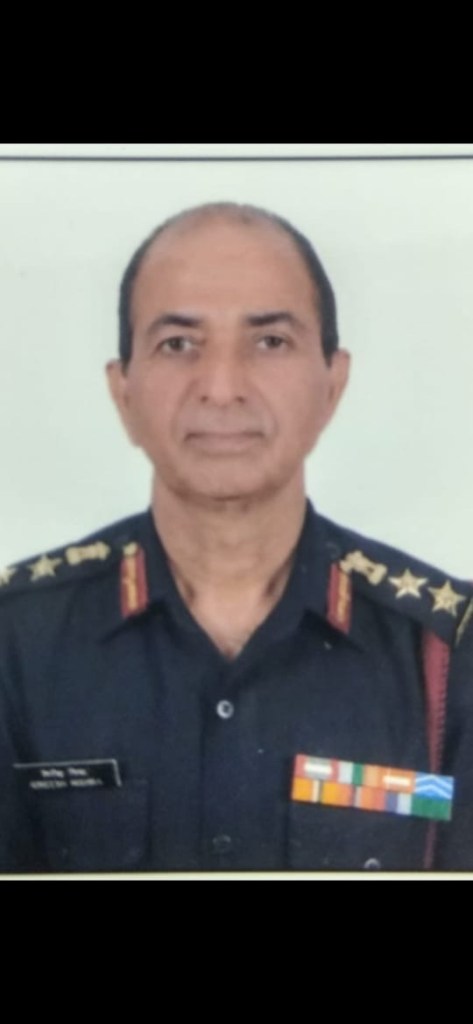
Graduating with his MBBS in 1985, Girish felt a pull beyond civilian practice. Inspired by stories of military valor, he joined the Indian Army Medical Corps (AMC) shortly after. Commissioned as a Captain, he underwent training that tested his mettle. “This uniform isn’t just cloth—it’s a promise to protect our nation,” he confided to a fellow officer during his early days at the Armed Forces Medical College in Pune. Posted to various field hospitals, Girish treated soldiers in challenging terrains, from the snowy heights of Kashmir to the deserts of Rajasthan. One memorable incident was during a border skirmish in the late 1980s, where he operated under fire to save a wounded jawan. “Hang in there, bhai—I’ve got you,” he whispered to the soldier, his hands steady despite the chaos. That act of bravery earned him commendations and forged lifelong bonds.
As years passed, Girish climbed the ranks—Major, Lieutenant Colonel, Colonel, and finally Brigadier in the early 2010s. He specialized in surgery or internal medicine (typical for AMC officers), leading medical teams in peacekeeping missions and disaster relief operations. During the 1999 Kargil War, he was instrumental in setting up forward surgical centers. “We can’t let our boys down,” he’d rally his team. “Every stitch, every dose—it’s for Bharat Mata.” Off-duty, he mentored young doctors, often sharing tales from his college days: “Back in Agra, we thought exams were tough. Wait till you face a real battlefield!”
Retiring after a distinguished career spanning over three decades, Brigadier Dr. Girish Mishra now lives a quieter life, perhaps in Agra or Delhi, involved in veterans’ welfare or teaching at medical institutions. He looks back with pride: “From those SNMC classrooms to the frontlines, it’s been a journey of heart and duty.” His story isn’t just about ranks and medals—it’s about the human spirit, the friendships like yours that shaped him, and the unwavering commitment to heal and serve. If you bump into him at a reunion, he’d probably say with a grin, “Batch mate, we made it—let’s grab some chai and reminisce!”


 deemagclinic
 deemag and chest clinic