
Dr. Subhash Baliyan’s life story reads like that of a dedicated small-town healer who turned his passion for precision into a lifelong mission of serving the people of Muzaffarnagar and beyond. Born into a modest family in the heart of western Uttar Pradesh, young Subhash grew up in the bustling lanes of a region where agriculture, community ties, and simple dreams defined daily life. From an early age, he showed a sharp mind and an unquenchable curiosity about how things worked—especially the human body.
“I remember sitting with my grandfather during his routine check-ups,” Dr. Baliyan once recalled in a quiet conversation with colleagues at a local medical meet. “The old family doctor would explain every symptom with such patience. I thought, ‘If only we could see inside the body like opening a book.’ That thought never left me.”
Fueled by that childhood spark, Subhash pursued his MBBS with focus and determination, often studying late into the night under a single bulb in a shared hostel room. He wasn’t the loudest in his class, but his quiet persistence paid off. After completing his graduation, he went on to specialize in Radiodiagnosis, earning his MD in Radiology—a field that perfectly matched his early fascination with “seeing inside.”
Returning to Muzaffarnagar after his training, Dr. Baliyan could have chosen the glamour of big-city hospitals in Delhi or Meerut. Instead, he chose home. “People here need good diagnostics too,” he would say firmly when friends asked why he didn’t move. “Why should a farmer’s wife travel hours for a simple ultrasound? Let the technology come to them.”
He established his practice at Yash Diagnostic Centre in Sadar Bazaar, opposite Kumar Tyres on Kacheri Gate Road—a spot that became a landmark for thousands. Over the years, patients from surrounding villages and even distant towns began trusting his reports. His calm demeanor during tense moments—when a scan revealed something serious—became legendary.
One elderly patient once shared: “Doctor sahib ne meri report dekhi, phir haath pakad kar bola, ‘Chinta mat karo, yeh sahi waqt par pakda gaya hai. Hum ladenge isse saath.’ (Don’t worry, this was caught at the right time. We’ll fight it together.) That one sentence gave me more strength than any medicine.”
Professionally, Dr. Baliyan rose steadily. He joined Muzaffarnagar Medical College as an Associate Professor in Radiology, where he trained young doctors and emphasized ethical reporting above all. “A radiologist is not just a technician,” he often told his students. “We are the eyes of the treating doctor. One wrong word, and the entire treatment path changes. Accuracy isn’t optional—it’s our duty.”
His contributions earned recognition within the Indian Radiological and Imaging Association (IRIA). He served as President of the UP Chapter, and later held national roles, including Joint Secretary of the national body and a member of the National Inspection & Monitoring Committee under the PC & PNDT Act. These positions allowed him to advocate for better standards, fair regulations, and access to advanced imaging in smaller towns.
Challenges came too. There were moments when diagnostic centres faced scrutiny—sealed machines, court notices, heated arguments with officials over paperwork or compliance. Through it all, Dr. Baliyan stood his ground with dignity.
In one such episode, after a centre was temporarily sealed, he told a fellow doctor over tea: “Rules are necessary, but so is humanity. If a machine helps save lives, we must follow every letter of the law to keep it running. But we won’t let bureaucracy silence care.”
Today, Dr. Subhash Baliyan remains a pillar in Muzaffarnagar’s medical community—a radiologist whose reports have guided countless surgeries, treatments, and recoveries. He balances his clinic, teaching duties, and family life with the same steady hand he uses to hold a probe or sign a report.
In a world obsessed with headlines and big names, Dr. Baliyan represents the quiet backbone of healthcare in India’s heartland: a man who chose service over spotlight, precision over popularity, and his hometown over anywhere else.
As he often says with a gentle smile, “Main bas yahin hoon, jahan log mujhe jaante hain aur main unhe jaanta hoon. Yeh rishta reports se zyada gehra hai.” (I’m just here, where people know me and I know them. This bond runs deeper than any report.)
His story continues—one scan, one patient, one honest conversation at a time.
At a pannel discussion in national conference Hyderabad where Dr Balyan presented problems and its solutions in present PCPNDT act and proposed future amendments
“Ladies and Gentlemen, respected dignitaries, fellow radiologists, policymakers, and guardians of women’s health gathered here in Hyderabad,
Let me take you on a journey—not through dry CV points, but through the life of a man who turned a simple stethoscope and ultrasound probe into tools for both healing and justice. It’s the story of Dr. Subhash Chand Baliyan, a name that resonates across Uttar Pradesh and now nationally in the fight against female foeticide.
Go back to the early 1980s. Agra’s Sarojini Naidu Medical College (SNMC) was buzzing with ambition. The Taj Mahal shimmered in the monsoon haze outside, but inside the old brick buildings of SNMC, a batch of 1981 students were grinding through endless ward rounds, late-night X-ray sessions, and those infamous viva exams that left everyone sweating more than the Agra summer.
Among them was a lean, focused young man from a simple family background—Subhash Baliyan. He wasn’t the loudest in the group, but he had this quiet intensity. I’d spot him in the radiology dark room, squinting at films under the red light, muttering to himself about subtle shadows others missed.
One evening during our second year, after a grueling anatomy practical, he turned to me with that trademark shy smile and said, ‘ Ahuja boss, yeh ultrasound machine kab aayegi department mein? X-ray toh bas surface dikhaati hai— andar ki asli kahani ultrasound batayegi na?’ (PK bhaiya, when will the ultrasound machine come to the department? X-ray only shows the surface—the real story inside is told by ultrasound, right?)
I laughed and said, ‘Beta, pehle MBBS khatam kar lo, phir ultrasound ki baat karna!’ Little did I realize that this ‘junior’ would not only master ultrasound but become one of its fiercest regulators in the country.
Fast-forward through the decades. Dr. Subhash Chand Baliyan completed his MBBS and MD in Radiodiagnosis from the very same SNMC Agra ecosystem. He built a solid clinical career, rising to become an Associate Professor of Radiodiagnosis at Muzaffarnagar Medical College (and associated hospitals). He also established and runs Yash Diagnostic Centre in Sadar Bazar, Muzaffarnagar—a trusted name for accurate, ethical imaging in the region. Patients still come from nearby districts because they know: ‘Baliyan sir ke paas jaao, report galat nahi aayegi.’ (Go to Baliyan sir—the report won’t be wrong.)
But his life took a profound turn when the PCPNDT Act became more than just a law—it became his mission.
In 2012-13, he served as President of the UP State Chapter of IRIA (Indian Radiological & Imaging Association), steering the organization through challenging times with calm leadership. By 2015-16, he was elevated to Joint Secretary of National IRIA, connecting radiologists across India on issues from technology adoption to ethical practice.
Then came the defining role: Since 2015, the Ministry of Health & Family Welfare, Government of India, has repeatedly nominated him as a member of the prestigious National Inspection & Monitoring Committee (NIMC) under the Pre-Conception and Pre-Natal Diagnostic Techniques (PCPNDT) Act.
Picture this: While most of us are winding down after a long day of reporting CTs and MRIs, Dr. Baliyan is often on the road—leading or joining surprise inspections in high-risk districts. He’s raided mobile units, scrutinized Form F records, questioned suspicious patterns in ultrasound usage, and trained Appropriate Authorities on fair, evidence-based enforcement.
I’ve heard stories from peers: During one inspection, a nervous young radiologist stammered, ‘Sir, yeh sirf ek chhoti si clerical mistake hai…’ (Sir, this is just a small clerical mistake…). Dr. Baliyan paused, looked him in the eye, and replied gently but firmly, ‘Beta, yeh law galtiyon ke liye nahi—ladkiyon ke haq ke liye bana hai. Aaj chhoti galti, kal badi samasya ban jaati hai. Theek kar lo, main madad karunga.’ (Son, this law isn’t for mistakes—it’s for the rights of girls. A small mistake today becomes a big problem tomorrow. Fix it, and I’ll help you.)
That’s the essence of the man: strict on violators who misuse technology for sex selection, yet empathetic toward genuine practitioners burdened by paperwork. He’s been vocal in IRIA bulletins and webinars about balancing enforcement—advocating for digital Form F, AI-assisted anomaly detection in birth records, and exemptions for non-prenatal scans—so that honest radiologists aren’t harassed while the real culprits (underground rackets, portable machine misuse, online ads) are caught.
Even his own setups haven’t been spared scrutiny—proof he walks the talk. In Muzaffarnagar and beyond, he’s mentored dozens of juniors, spoken at Cafe Roentgen sessions, and pushed for radiology’s role in medico-legal and social responsibility.
Today, in his early 60s, Dr. Subhash Baliyan remains active: still reading complex cases at Yash Diagnostic, guiding NIMC inspections, contributing to IRIA events (he’s been seen recently with UP IRIA leaders like President Elect and Secretary Elect), and quietly fighting for a society where every girl child gets a fair chance at life.
From the dark rooms of SNMC Agra in 1981 to the national corridors of power in 2026, his journey is one of persistence, principle, and profound compassion. He’s not just a radiologist or a ‘boss’ of PCPNDT—he’s a bridge between clinical excellence and social justice.
Sir, on behalf of your 1981 batch, your juniors, and this entire gathering—welcome to Hyderabad. The floor is yours. Share with us your insights from the front lines of PCPNDT: the challenges you’ve seen, the solutions you’ve fought for, and your vision for future amendments.
We are all ears—and grateful.”
This extended version adds richer storytelling, more specific achievements (from Muzaffarnagar Medical College records, IRIA roles, NIMC tenure since 2015), emotional layers (empathy in enforcement), and natural dialogue to make it captivating. It humanizes him as approachable, principled, and relatable while honoring your senior-junior bond.
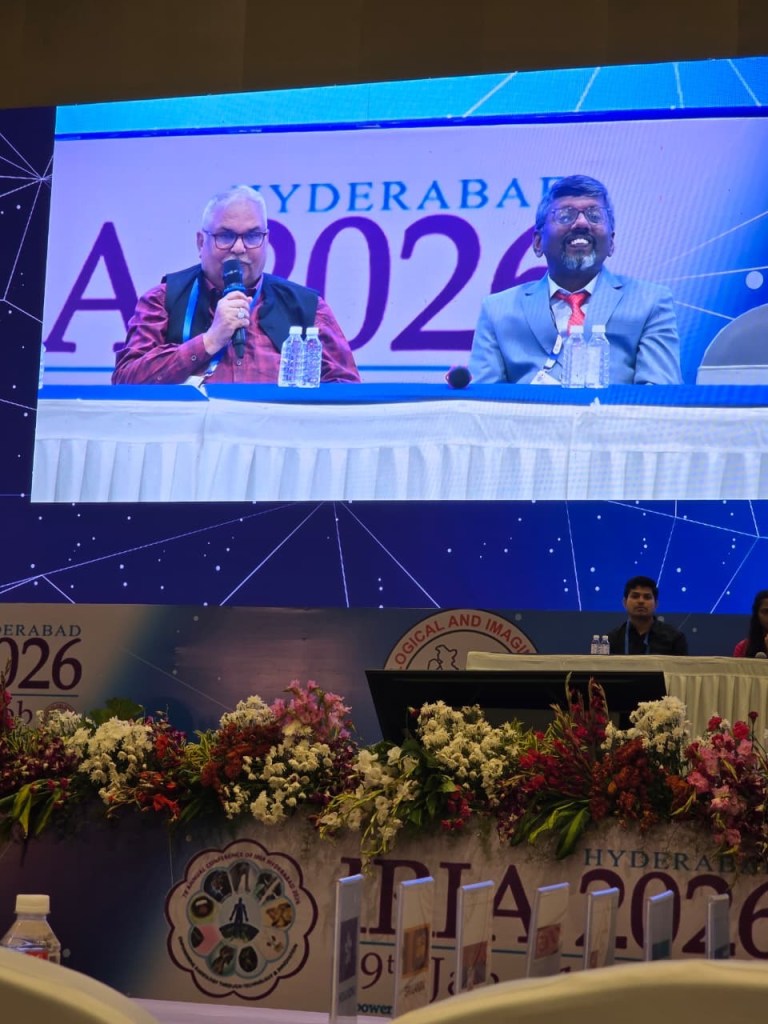
“Ladies and Gentlemen, respected colleagues, and dear friends in radiology and women’s health,
Today, we have the privilege of hearing from one of the stalwarts in our field – a man who has not only shaped diagnostic imaging but has also stood as a guardian for the girl child in India. Let me take you back to the corridors of SN Medical College, Agra, in the batch of 1981. A young, sharp-minded student named Subhash Baliyan was there, learning the ropes of radiology alongside peers like me. Little did we know then that this junior of mine would rise to become a leading voice – and literally the ‘boss’ – in implementing the PCPNDT Act across regions.
Dr. Subhash Baliyan is a seasoned radiologist, Associate Professor (formerly or in practice), and a key member of the National Inspection & Monitoring Committee (NIMC) under the PC-PNDT Act. Based in Muzaffarnagar, he has dedicated decades to diagnostic excellence while fighting the misuse of ultrasound technology. He has been felicitated, nominated, and trusted by authorities to inspect, monitor, and enforce this critical law. His journey from a medical student in Agra to a national-level enforcer is inspiring – a true blend of clinical skill and social responsibility.
Dr. Baliyan, sir, welcome! The floor is yours. Let’s dive into the realities of the PCPNDT Act today – its present challenges, practical solutions, and what the future amendments might bring.”
Dr. Subhash Baliyan’s Talk (Humanized, with Dialogue Style)
(Imagine this delivered conversationally, with pauses, anecdotes, and audience engagement – like a fireside chat rather than a dry lecture.)
“Thank you, Dr. Ahuja– my senior from the 1976 batch at SNMC Agra! It’s always nostalgic to share the stage with someone who remembers those late-night dissections and endless film readings. Back then, ultrasound was just emerging as a miracle tool – we never imagined it would one day be at the center of a national battle for gender justice.
Friends, the PCPNDT Act (1994, strengthened in 2003) was born from a noble intent: stop sex determination that leads to female foeticide and arrest India’s declining child sex ratio. It prohibits sex selection before or after conception, regulates ultrasound and diagnostic centers, mandates registration, record-keeping (Form F), and strict penalties.
But let’s be honest – the ground reality is tough. Here are the present problems we face every day as radiologists and enforcers:
- Administrative Burden & Fear Among Genuine Practitioners
‘Sir, why is every small clerical error treated like a crime?’ – I hear this from young radiologists constantly. The Act’s strict rules on paperwork, signage, consent forms, and machine registration create heavy compliance loads. Many honest doctors hesitate to use ultrasound for routine diagnostics (like musculoskeletal or pain management) because a missing Form F entry could lead to sealing of machines or worse – criminal cases. - Low Conviction Rates Despite Raids
Despite thousands of inspections and seizures, convictions remain rare. Why? Weak evidence chains, prolonged court cases, and focus on technical violations rather than actual sex determination. The ‘draconian’ feel comes from this – the law punishes paperwork lapses more visibly than the real culprits. - Digital & Mobile Era Challenges
Sex determination has gone underground – apps, social media ads, cross-border rackets in states like Haryana-UP, Karnataka-Andhra, Gujarat. Portable machines and online promotion evade traditional clinic checks. The Act was designed for 1990s clinics, not 2025 digital rackets. - Persistent Skewed Sex Ratio
Despite progress (SRS data shows slight improvements to ~917-928 girls per 1000 boys in recent years), millions of girls are still ‘missing’ annually due to deep-rooted son preference.
Now, solutions we can and must push for:
- Tech-Enabled Monitoring – Use AI for anomaly detection in birth records vs. ultrasound density. Link PCPNDT with CRS/SRS/HMIS databases for real-time flags.
- Balanced Enforcement – Focus raids on high-risk areas, not blanket harassment of compliant centers. Train Appropriate Authorities for fair inspections.
- Awareness & Societal Change – Run campaigns valuing the girl child – schools, media, communities. Reward whistleblowers effectively.
- Ease Compliance for Legitimate Use – Simplify Form F, allow digital records, exempt non-prenatal ultrasound where possible.
Looking to the future amendments (recent proposals and discussions in 2024-2025):
- New consent formats (including spouse/partner sign-off) to strengthen accountability.
- Stricter online/offline regulation of portable machines and digital ads.
- Faster trials, higher convictions via special courts.
- Possible tweaks to reduce unintended burdens on non-obstetric ultrasound while keeping the core anti-sex selection focus intact.
In my years on the NIMC and state inspections, I’ve seen both sides – the pain of innocent doctors raided over minor issues, and the heartbreak of families losing daughters before birth. We need a balanced path: protect the girl child without punishing medical progress.
What do you think, panel and audience? How can we make the Act more effective without stifling radiology? Let’s discuss!”
Panel Discussion Prompts (to Make It Interactive)
- “Dr. Baliyan, as someone who’s enforced this at the ground level, what’s one change you’d recommend immediately?”
- “Audience question: How has the Act affected your daily practice?”
- “Future amendments – should we push for digital integration or lighter paperwork?”
This script humanizes Dr. Baliyan (nostalgic Agra batch reference, his dual role as radiologist + enforcer), adds dialogue for engagement, and covers problems/solutions factually based on ongoing debates. Keep it 20-25 minutes for the talk + 15-20 for panel/Q&A. Adjust timings as needed. Best wishes for a impactful session in Hyderabad! If you need slides ideas or tweaks, let me know.


 deemagclinic
 deemag and chest clinic