
Dr. Ajay Kumar Nihalani didn’t set out to become one of North India’s most respected psychiatrists with a simple “I want to help people” speech. His journey began in the bustling lanes of western Uttar Pradesh, where medicine wasn’t just a career—it was a calling shaped by the everyday struggles he saw around him.
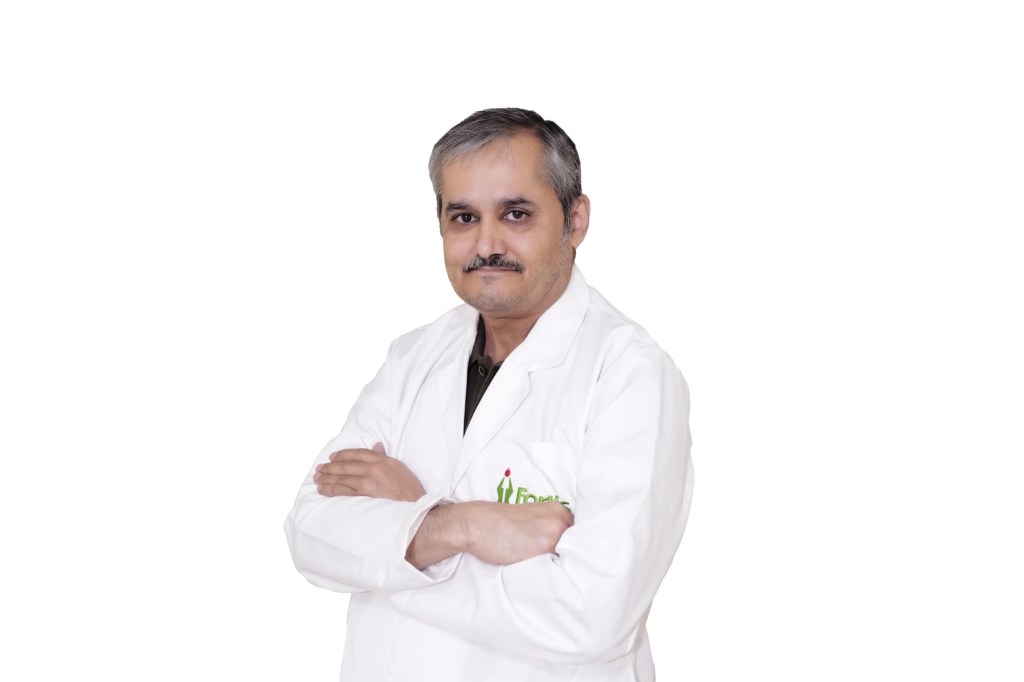
Born and raised in Meerut, young Ajay watched families quietly suffer through what no one dared name: “tension,” “paagalpan,” or simply “gussa.” In 1997, he graduated with his MBBS from Lala Lajpat Rai Memorial Medical College, Meerut—the same college where he later volunteered his time. But something was missing. The human mind fascinated him more than the body. In 2004, he completed his MD in Psychiatry from Sarojini Naidu Medical College, Agra, and almost immediately made a bold decision that would define his life.
“Beta, London? Itni door? Yahan bhi toh patients hain,” his worried mother said one evening as he packed his bags in June 2004. Ajay smiled, holding her hands. “Maa, agar main yahin ruk gaya, toh sirf yahin tak dekh paunga. Wahan jaakar jo naya seekhunga, woh yahan laakar hazaron ko theek kar sakta hoon.” He boarded the flight to the UK with little more than his MD degree, a dream, and the quiet fire of someone who knew the stigma around mental health back home needed a global perspective to fight it.
London welcomed him into the St Mary’s Psychiatry Training Scheme. He trained at legendary institutions like The Maudsley Hospital, rotating through general adult psychiatry, old-age care, child and adolescent mental health, learning disabilities, de-addiction, and even forensic psychiatry. He cleared the rigorous MRCPsych exams in 2007–08, earning membership in the Royal College of Psychiatrists. He also pursued an M.Sc. in Challenging Behaviour at Cardiff University. Colleagues still remember him as the quiet, hardworking Indian doctor who never missed a ward round.
One senior consultant in Yorkshire once pulled him aside after a tough forensic case. “Ajay, you’ve got the clinical eye of someone twice your age. But tell me—why leave all this and go back?” Dr. Nihalani looked him straight in the eye and replied, “Because in India, mental illness still hides behind closed doors. My patients there don’t just need pills—they need someone who understands both their culture and the best science the world has to offer.”
He returned to India in 2011, armed with international expertise and an even deeper sense of purpose. He set up Nihalani Clinics in Indirapuram, Ghaziabad, and began consulting at leading hospitals including Fortis Hospital Noida, Pushpanjali Crosslay, and Max Vaishali. Today, he is a senior consultant in Mental Health & Behavioural Sciences at Fortis Noida, running a thriving private practice that feels more like a sanctuary than a clinic.
What makes patients light up when they talk about him? It’s not just his skill—it’s his humanity. He offers Repetitive Transcranial Magnetic Stimulation (rTMS)—one of the few psychiatrists in the entire NCR to do so—alongside medication, psychotherapy, counselling, and cognitive therapies. He treats everything from depression, anxiety, OCD, bipolar disorder, schizophrenia, and ADHD to geriatric issues, substance abuse, and even sexual health concerns. But the real magic happens in the quiet moments.
A grateful parent once wrote about her son who had been hearing voices and struggling with schizophrenia. After months of no improvement elsewhere, she brought him to Dr. Nihalani. The boy improved dramatically. When she thanked him profusely, Dr. Nihalani replied gently in his soft-spoken way: “Very many thanks for your feedback. It’s just that your son was destined to benefit from treatment. As they say, I treat—God heals. I’m happy for you.”
That humility is his signature. He gives concessions on fees for families who can’t afford them. He listens—really listens—without judgment. His clinic in Rajhans Plaza, Ahinsa Khand-1, Indirapuram, feels warm and welcoming, not clinical and cold. Families walk in carrying the weight of years of silence and walk out with hope, practical plans, and the rare feeling that someone truly sees them.
Beyond the clinic, Dr. Nihalani has published research on psychosocial rehabilitation, including a moving study on parents who lost children in the devastating 2005 Balakot earthquake in Pakistan—showing how grief hits mothers and fathers differently because of cultural expectations. He stays connected with global psychiatry through memberships in the Indian Psychiatric Society (as Fellow), American Psychiatric Association, and more.
Today, when a young medical student asks him for advice, Dr. Nihalani often says with a quiet smile, “Psychiatry is not about fixing broken minds. It’s about walking beside someone until they remember their mind was never broken—it was just tired of fighting alone.”
From the wards of Meerut to the corridors of London’s Maudsley and back to the families of Noida-Ghaziabad, Dr. Ajay Kumar Nihalani has built a career that proves one simple truth: the best doctors don’t just treat illness—they restore dignity, one compassionate conversation at a time. And in a country still learning to talk openly about mental health, that makes him not just a great psychiatrist, but a quiet revolutionary.
He had a big farm house and wanted to send strawberries to me. When I got worried about his troubles and logistics he wasn’t pleased
He expired last night on 18 May 2026 . Cremation is today on 19 May 2026. Om shanti
INDIAN ASSOCIATION OF PRIVATE PSYCHIATRY (U.P. & U.K.)
Association of Psychiatrists in Private Practice
Society Registration No.: 1597/2017-2018
PRESIDENT
Dr. Vipul Tyagi
Mob.: 9312246216 drvipultyagisnh@gmail.c om
VICE-PRESIDENT
Dr. Amarjeet Popli
Mob.: 9219879315 amarjeet.popli@yahoo.com
SECRETARY
Dr. Shobit Garg
Mob.: 8958534261 shobit.garg@gmail.com
HON. TREASURER
Dr. Priya Ranjan Avinash
Mob.: 9435703524 drpriyaranjan.avinash@gmail.com
PATRONS
Prof. Dr. A.K. Agarwal
M: 9415006128 mradulanil@yahoo.co.in Prof. Dr. R.K. Mahendru M: 9336124372
IMMEDIATE PAST PRESIDENT
Dr. C.B. Madeshia
M: 9935815222
drcbmadeshia82@rediffmail.com
IMMEDIATE PAST SECRETARY
Dr. Amarjeet Popli
M: 9219879315 amarjeet.popli@yahoo.com
AWARD COMMITTEE
Chairperson
Dr. Madhukar
M: 9415047901 drmadhukar_fzd@rediffmail.com Members
Dr. Ajay Kohli
M: 9415305478 drajaykohli@gmail.com
Dr. Ravi Kumar
M: 9839104901 ravi_regency@rediffmail.com
EDITOR
Dr. Sunil Awana, Noida
M: 9811364831 drsunilawana@rediffmail.com
JOINT SECRETARY
Dr. Tanu Singh
M: 9554966333 drtanu333@gmail.com
MEMBERS – EXEC. COUNCIL
Dr. Shalabh Jain
Saharanpur | 9358311665
Dr. Sachchida Nand Gupta
Gorakhpur | 9935934440
Dr. Anant Rana
Moradabad | 9412310777
Dr. Kunwar Vaibhav
Ayodhya | 7388777224
Dr. Abhinav Srivastava
Gorakhpur | 9453778922
Dr. Anubhav Rathi
Ghaziabad | 9810640830
Dr. Ankita Priyadarshini
Dehradun | 8431316118
Dear Colleagues,
With profound grief and heavy hearts, the Indian Association of Private Psychiatry – U.P. & Uttarakhand Chapter conveys its deepest condolences on the sudden and untimely passing of our beloved colleague, Life Fellow and former EC member,
DR. AJAY KUMAR NIHALANI
MBBS, MD Psychiatry, MRCPsych | Senior Consultant, Mental Health & Behavioural Sciences, Fortis Hospital, Noida
(1973 – 18 May, 2026)
Dr. Nihalani was a clinician of rare distinction and a man of exceptional humanity. Trained at Lala Lajpat Rai Memorial Medical College, Meerut, and completing his MD Psychiatry from Sarojini Naidu Medical College, Agra, he went on to train at the Maudsley Hospital, London, earning his MRCPsych from the Royal College of Psychiatrists. He returned to India by choice, driven by a commitment to bring world-class psychiatric care to patients in the NCR, a calling he fulfilled with singular dedication at Nihalani Clinics, Indirapuram, and Fortis Hospital, Noida.
Among the very few psychiatrists in the entire NCR to offer Repetitive Transcranial Magnetic Stimulation (rTMS), Dr. Nihalani combined the best of evidence-based medicine with an irreplaceable warmth and humility. He treated illness, but more importantly, he restored dignity. His patients, and their families, remember him not for his credentials alone but for the quiet, unhurried compassion he brought into every room he entered.
He was a Fellow of the Indian Psychiatric Society, a member of the American Psychiatric Association, and a valued Life Member of the Indian Association of Private Psychiatry – U.P. & Uttarakhand Chapter. His passing leaves an irreplaceable void in the private psychiatry community of the region he served so faithfully.
We extend our heartfelt condolences to his family, friends, colleagues, and patients. May their grief be eased with time, and may his memory continue to inspire all of us to practise psychiatry with the same compassion, rigour, and humility that defined his life.
“I treat – God heals. I am happy for you.”
– Dr. Ajay Kumar Nihalani, in his own words
May his soul rest in eternal peace. Om Shanti. On behalf of the
Indian Association of Private Psychiatry – U.P. & Uttarakhand Chapter
Dr. Vipul Tyagi
President, IAPP – U.P. & U.K.
19th May, 2026
Dr. Shobit Garg
Secretary, IAPP – U.P. & U.K.
SECRETARIAT: #200, Chaman Vihar, Phase I, Lane No. 2, Dehradun-248001 (Uttarakhand) INDIA E-mail: shobit.garg@gmail.com | Mob.: +91 8958534261


 deemagclinic
