
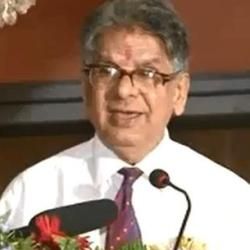
Picture this: a sharp-eyed doctor in a white coat, stethoscope around his neck, peering at an ECG strip like it was ancient Sanskrit poetry. Suddenly, he’d break into a warm smile and quote Lord Jagannath or a line from Odia literature, turning a tense consultation into a heartfelt conversation. That was Dr. K.P. Mishra — “Kabi” to friends (meaning “poet” in Odia) — a legendary cardiologist, medical educator, author, and humanist whose life blended cutting-edge medicine with deep cultural and spiritual roots.
Roots in Odisha and Global Training
Born on August 10, 1938, in Cuttack, Odisha, young Kabi grew up surrounded by the rich literary and devotional traditions of his land. He earned his MBBS from SCB Medical College, Cuttack, followed by postgraduate training at the prestigious PGI Chandigarh. His quest for excellence took him to the United States, where he honed his skills in cardiology. He earned the prestigious FACC (Fellow of the American College of Cardiology) in 1979 and later FRCP from Glasgow in 2005.3
But success abroad never tempted him to stay away forever. “Why chase dollars when hearts need healing back home?” he often reflected to close friends.
Building Cardiology in India: From Rourkela to Apollo
In 1973-74, Dr. Mishra joined Ispat General Hospital (IGH) in Rourkela straight from the US — handpicked without an interview by the CMO, a cardiac surgeon himself. He single-handedly established the cardiology department there, bringing world-class care to industrial Odisha.1
His colleague Dr. Sanjoy Satpathy later recalled those humble beginnings with affection:
“The year was 1973-74. Dr. K.P. Mishra (KPM) joined IGH, Rourkela… He came with a two-year-old son, wife Priti (a lady doctor), and mother-in-law. There wasn’t enough space, so I slept on the floor… I bought utensils and a kerosene stove. That old Lambretta scooter of mine — it took 20–30 kicks to start! — was our only transport. I’d drop the famous cardiologist to duty and back.”
From Rourkela, Dr. Mishra’s reputation soared. He moved to Apollo Hospitals in Chennai, rising as a top interventional cardiologist and eventually becoming Director of Medical Education. In 2010, he returned to Odisha as Director of Medical Education and Training at Apollo Hospitals, Bhubaneswar — pouring his energy into training the next generation of doctors.0
Patients loved him not just for his expertise but for his equal treatment of everyone. In an era of growing commercialization, he stood out. One former patient shared: “Dr. Mishra looked at me — a simple man from a village — the same way he would a VIP. He explained my blocked arteries like I was his own brother.”
Beyond Medicine: The Literary and Spiritual Soul
Dr. Mishra wasn’t confined to the cath lab. A devoted follower of Lord Jagannath, he helped establish the Jagannath Temple in Chennai and passionately promoted Odia culture. He authored several acclaimed books, including the celebrated Baisi Pahacha, weaving together medicine, devotion, and literature. His ECG interpretation books became go-to guides for students and practitioners alike.3
He had a razor-sharp memory and vast knowledge spanning mythology to modern medicine. As one friend put it: “If anyone in Odisha deserved a Padma award, it was KPM.”
A Life Well-Lived, A Poetic Farewell
Even after surviving multiple heart attacks (one treated lightning-fast at Apollo), Dr. Mishra kept teaching and inspiring. On March 15, 2014, at around age 75-77, fate wrote a dramatic final chapter. While delivering a lecture and launching one of his books at the YMCA in Cuttack, he suffered a massive cardiac arrest and passed away — doing what he loved most: sharing knowledge till the very end.0
He is survived by his wife, Dr. Aratipriti Mishra, and two sons. Tributes flooded in from Apollo’s Dr. Prathap C. Reddy and others. Former Odisha Governor Dr. M.M. Rajendran captured his essence beautifully:
“In these days of commercialisation of the medical profession, the likes of him were rare indeed… His humanitarianism to find relief for his patients, rich or poor, stood out, and made him a role-model for doctors.”2
Dr. K.P. Mishra showed the world that true healing goes beyond stents and scans — it’s about touching souls, preserving culture, and living with compassion. His legacy continues in every doctor he mentored, every patient whose heart he steadied, and every line he wrote. A cardiologist, a poet, a true mensch — his rhythm still echoes on.


![Jumping Spider [Explore August 9 2026]](https://live.staticflickr.com/65535/55449674771_088bc6d4dd_s.jpg "Jumping Spider [Explore August 9 2026]")


 deemagclinic
