
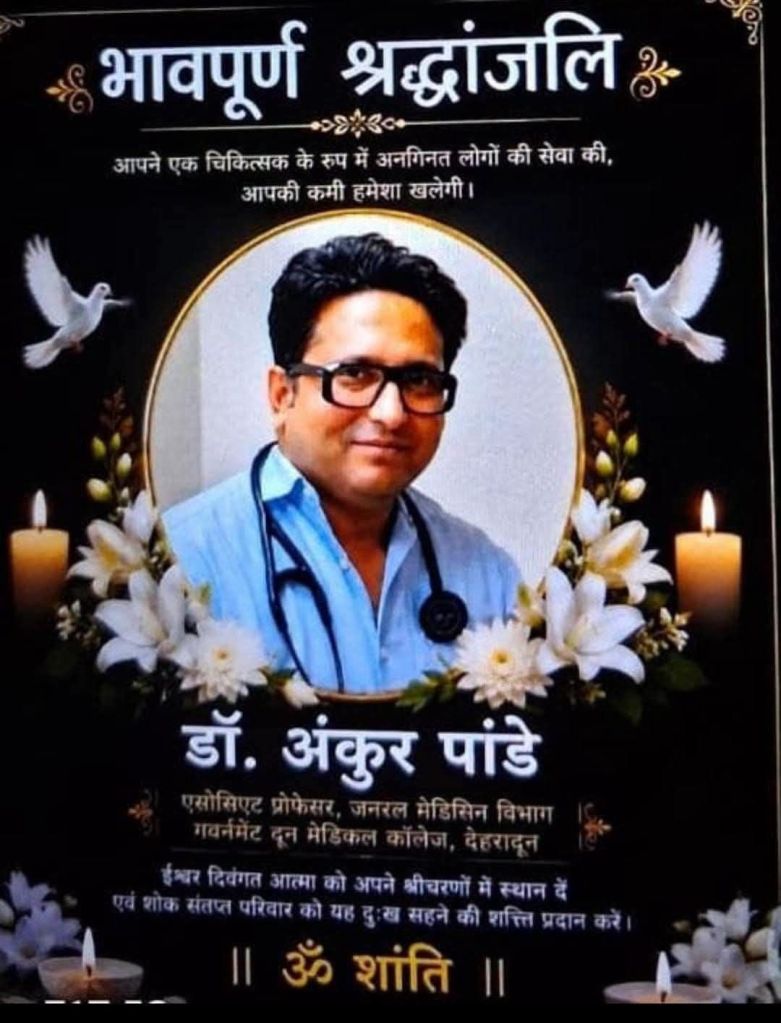
Dr. Ankur Pandey, was an Associate Professor in the Department of General Medicine at Government Doon Medical College (GDMC), Patel Nagar, Dehradun, Uttarakhand.
He held an MBBS and MD in Internal Medicine and was registered with the Uttarakhand Medical Council (Registration No. 7865). He had over 10 years of experience as an Internal Medicine physician and had worked in different cities in India.
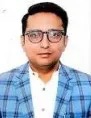
According to professional profiles, he was known for handling numerous complex medical cases, accurate diagnosis, and empathetic patient care. His areas of special interest included infectious diseases, hypertension, thyroid disorders, and diabetes management. He also participated in research work, workshops in Internal Medicine, and had published papers. Patient feedback on available platforms rated him highly (around 96% recommended based on dozens of ratings).
The Healer of the Hills
In the mist-wrapped valleys of Uttarakhand, where the Doon Hospital stood like a steadfast guardian against the mountain winters and the sudden tempests of human suffering, there once walked a young physician whose hands carried the quiet certainty of healing. Dr. Ankur Pandey was not merely a senior physician. To those who knew him, he was the pulse that kept hope alive in crowded corridors, the voice that calmed trembling patients, and, to one man in particular, a younger brother whose absence would leave a wound that time itself could never close.
It began almost casually, the way the most profound bonds sometimes do. Barely a week after Ankur had joined the hospital, their paths crossed. The older man, already seasoned by years of watching the region’s medical struggles, found himself face to face with a smiling, open-hearted doctor who refused, from the very first day, the formal distance of titles.
“Don’t call me Doctor Sahib,” Ankur said, his eyes bright with that characteristic warmth. “You are my elder brother. From today, that is how it will be.”
And so it was. Whenever the elder brother stepped into Doon Hospital, Ankur would rise from his chair the moment he saw him, stride out of his cabin, and guide him inside with a hand on the shoulder.
“This is my bade bhaiya,” he would announce to whoever was present, as though introducing a member of his own blood. The words carried no performance—only genuine affection.
Those were the days when the world itself seemed to tilt. Coronavirus arrived like an uninvited storm, followed by wave after wave of crises that tested every doctor’s resolve. Through it all, the two men stood shoulder to shoulder. When the wards overflowed and fear walked the corridors, it was Ankur who found a way forward. The elder brother would later say that every crisis of that period was navigated “through Ankur.” The young physician never claimed credit. He simply worked.
On the two days each week when Ankur held his OPD, the longest line in the hospital formed outside his room. Patients waited with the patience of those who know they will be seen by someone who truly looks at them. The elder brother would sometimes shake his head in quiet amazement.
“Ankur,” he would say, “how do you manage so much at such a young age? And this dedication… where does it come from?”
Ankur’s answer never changed. “Bade Bhaiya, I came here to serve the people of my hills. That is all.”
One afternoon the elder brother pressed further. “Your home is toward Kanpur, isn’t it?”
Ankur smiled, the kind of smile that carried old family stories. “Yes. But our ancestors left Bhawali in Nainital long ago and settled there. The mountains never really left us.”
In the quiet moments between emergencies and evening rounds, their conversations drifted to family, to the state of healthcare in Uttarakhand, and, more than once, to marriage. Ankur would lean forward, half-serious, half-hopeful.
“Bade Bhaiya, you must arrange my wedding from the hills. Find me a girl from our mountains.”
The elder brother tried. He spoke to families, made inquiries, and even found himself on the phone with Ankur’s teacher-parents—gentle, proud people who had poured their dreams into their brilliant son. There were plans. There were hopes. Somewhere, wedding arrangements had already begun to take shape.
And then, without warning, the heart of the young healer stopped.
No long illness. No dramatic struggle that the world could understand. Simply a cheerful, hardworking doctor in the prime of his youth, gone. The elder brother would carry the question for the rest of his days: How does a heart so full of life simply cease?
He remembered the small, telling moments. How he used to send patients to Ankur with a confident clap on the shoulder. “Go to Dr. Ankur Pandey. Tell him I sent you.” And how Ankur, even if he was already stepping out of his cabin at the end of a long day, would turn back the moment he heard the name. He would sit down again, listen, examine, prescribe—never once making the referred patient feel like an interruption. Thousands of such patients left his room carrying not only medicine but the quiet gift of renewed life.
Now the man who had given so many second chances had been denied his own.
The elder brother thought of Ankur’s parents—the teacher couple whose greatest dream had been to see their gifted son married, settled, continuing the lineage of service. He thought of the unfinished wedding plans, of the empty chair in the OPD where the longest queues once formed, of the cabin that would no longer open with that familiar, rising smile.
“Ankur,” he whispered into the silence that followed the news, “you have left a wound that will never heal. In the short time you were given, you achieved what many cannot in a lifetime. You gave us so much. And then you left.”
In the difficult days that followed, the elder brother’s only prayer was simple and heavy with grief: that God grant Ankur’s family the strength to bear a loss so sudden and so vast. Tearful tributes rose from every corner of the hospital and beyond. An irreparable loss, they said. A void that nothing would fill.
And yet, in the stories that lingered—of the doctor who called a stranger “Bade Bhaiya” on the first day, of the physician who turned back from the door for one more patient, of the young man who carried the mountains in his heart even while living far from them—Dr. Ankur Pandey remained. Not as a name on a board, but as a living presence in the memory of those he healed and those who loved him.
Such is the strange cruelty and strange grace of a life lived in service. The healer of the hills is gone. The hills, and the people who walk them, will remember.
Faculty listings of Government Doon Medical College confirm his position as Associate Professor (MBBS, MD Medicine) in the General Medicine department alongside other faculty members.
Publicly available detailed personal background (such as exact medical college of graduation, earlier career postings beyond the Doon association, or family details) is limited in online sources. Profiles primarily highlight his clinical and teaching role at GDMC.
As per the information provided, Dr. Ankur Pandey passed away on 5 August 2026 at a Max hospital facility due to massive left internal carotid artery thrombosis with infarct. Last rites were performed at hardwar ghat on 6 August 2026 2 pm. He was serving as Associate Professor at Doon Medical College at the time.
His contributions as a clinician and teacher in Internal Medicine at a government medical college in Dehradun are noted in institutional and healthcare directory records.


 deemagclinic
