
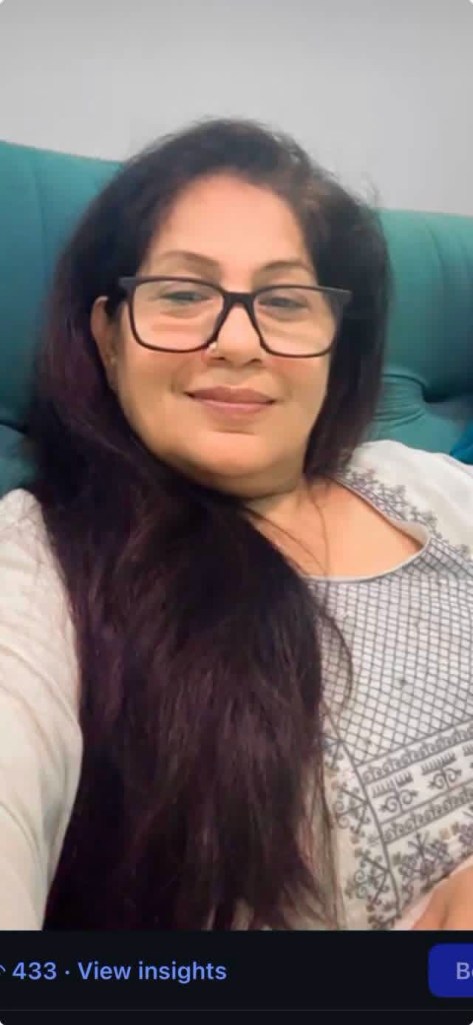
Prof. Dr. Lopa Mehta walks the corridors of Mumbai’s Seth GS Medical College and KEM Hospital not as a distant legend, but as someone who still greets students with a quiet smile and a probing question: “Why did you choose medicine? To cure, or to truly care?”
She is Emeritus Professor and former Head of the Department of Anatomy. For decades she taught the intricate maps of the human body—muscles, nerves, vessels—yet she always insisted the real subject was larger. “The body is not a machine you can keep repairing forever,” she would tell her classes. “It is a limited system with a fixed quota of life energy. When that energy runs out, the subtle body simply leaves. That is death. Not defeat. Not failure. Just the next natural step.”
At 78 she put those words into action. She sat down and wrote her Living Will in clear, unflinching language:
“When the body stops giving support and there is no possibility of improvement, then treatment should not be given to me. No ventilator, no tube, no futile hospital run. May I have peace in my final moments—where the emphasis is on wisdom over the intensity of treatment.”
She added a practical request: “When it’s my turn, just take me to KEM hospital. Where I believe there will be no unnecessary intervention.”
Friends and colleagues were startled. “Lopa, you’re still so full of life!” one said. She smiled. “Exactly. That is why I can say this calmly now—while I still can.”
Around the same time she published her research paper, “The Anatomy of Death.” In it she argued that modern medicine has never truly looked at death as an independent biological process. “We keep insisting death is always caused by some disease,” she wrote, “and if we treat the disease hard enough, death can be averted. But the science of the body is deeper than that. Every cell, every organ spends its energy every moment. When the body’s quota is exhausted, it calms down. Someone completes the journey in 35 years, someone in 90. Neither dies incomplete—if we stop calling it defeat.”
She has long collaborated with the late Dr. Manu V. L. Kothari, questioning many cherished medical certainties. Together they looked at coronary disease, cancer, and aging not as pure enemies to be conquered at any cost, but as part of the body’s own built-in trajectory. Their books and papers still provoke lively debate among younger doctors.
Today, in her eighties, she continues as an advisor to the Dr. Manu V. L. Kothari Chair of Medical Humanities at KEM. In workshops she sits with first-year students and asks gently: “When a patient is dying, what does the family need most from you—another scan, or your honest presence?” She listens more than she lectures. Students later say the sessions change how they see both patients and themselves.
In August 2025, when false rumours of her death spread on social media, the current head of anatomy called her. Her reply was characteristically dry and warm: “I’m alive and well.” Then she laughed. “See? Even death needs accurate diagnosis.”
Dr. Lopa Mehta never set out to be a crusader. She simply lived what she taught: that medicine’s highest art is knowing when to fight and when to let go with respect. Her Living Will and her writings invite the rest of us to prepare for the same quiet dignity. As she often reminds anyone who will listen:
“Death is the next step in the journey of life. Stop fighting it. Prepare for the life that comes before it—and when the moment arrives, face it with peace.”


 deemagclinic
